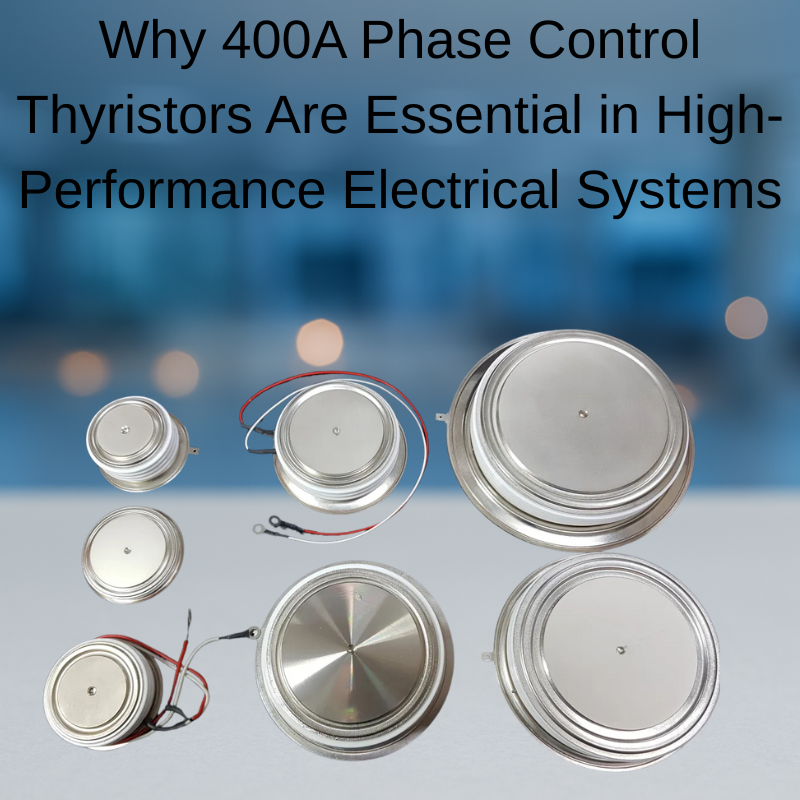
Diagnosing Common Issues in 500A Phase Control Thyristors for Reliable Operation

Introduction
In high-power industrial applications, the 500A phase control thyristor is a trusted component due to its robust current handling and switching reliability. However, even the most durable electronic components can encounter issues. Troubleshooting these problems requires a deep understanding of their thermal, electrical, and physical behavior. This article outlines practical methods for identifying and resolving common problems associated with 500A phase control thyristors.
Thermal Challenges and Stability
Thermal performance is often at the heart of thyristor-related issues. These devices are engineered for high thermal stability, but inadequate cooling or improper mounting can lead to overheating and eventual failure. Engineers must verify that heatsinks are adequately sized and that thermal paste or pads are properly applied to ensure even heat dissipation.
Repeated exposure to high inrush currents may also test the high surge current rating of the component. If the thyristor experiences frequent power surges beyond its threshold, internal damage could occur over time. The 500A phase control thyristor, when used within its surge current limits, offers exceptional durability, but it's essential to confirm surge events are not being underestimated in system design.
Regular thermal inspection using infrared imaging or embedded sensors can provide early warnings, helping to avoid downtime or damage caused by unnoticed overheating.
Electrical Integrity in Harsh Environments
High dv/dt immunity is a vital characteristic that protects the thyristor from false triggering when rapid voltage changes occur. If a 500A phase control thyristor begins to show unpredictable behavior, one should investigate the possibility of noise-induced triggering. Poor snubber design or long lead inductance can compromise the effectiveness of dv/dt protection.
Additionally, these thyristors are designed for an extended temperature range (–40°C to +85 °C). Problems such as inconsistent triggering, current leakage, or early breakdown may emerge if the device is exposed to ambient conditions outside this range. It's crucial to ensure the application environment stays within these temperature boundaries for optimal performance.
Environmental monitoring and board-level temperature logging can help maintain operation within acceptable ranges.
Leakage and Junction Issues
Leakage current is another factor to assess when diagnosing thyristor health. While low leakage current is a standard feature in these devices, increased leakage can indicate internal breakdown or contamination on the die surface. This can stem from manufacturing defects, physical stress during installation, or prolonged exposure to high humidity.
One must also evaluate the high junction temperature tolerance of the 500A phase control thyristor. If junction temperatures routinely exceed their safe threshold, even within short bursts, this can reduce the component’s life expectancy significantly. Using a thermal simulation or transient thermal measurement tools can help verify whether the system’s thermal path is efficient enough.
Field service engineers are encouraged to log historical temperature and leakage data to identify trends that signal early degradation.
Application-Level Misalignments
In some cases, the issue may not lie within the thyristor but in how it's being used. Systems that frequently switch at the edge of temperature or surge specifications might unintentionally stress the component. A thorough review of the application’s power requirements and the 500A phase control thyristor’s rated specs is critical to ensure proper alignment.
Reviewing datasheets, checking for undervoltage lockout compliance, and verifying gate drive signals can often reveal overlooked design flaws that lead to operational issues.