
Enhancing Power Conversion Efficiency Using 700A Phase Control Thyristors
In industrial power systems, efficiency is a major performance benchmark. Whether managing motor drives, power factor correction, or heavy-duty AC/DC conversion, the 700A phase control thyristor plays a crucial role in controlling power delivery with precision and minimal waste. This article explores how engineers can enhance system efficiency by understanding and leveraging the full potential of 700A thyristor characteristics.
Select the Right Electrical Characteristics
The starting point is always selecting a device whose specifications support your system's efficiency goals. The datasheet KP700A‑6500V low leakage current 700A phase control thyristor offers engineers a low-leakage, high-voltage solution for minimizing energy loss in both blocking and conduction states.
The 6500V reverse blocking capacity ensures that the device remains secure under harsh voltage fluctuations, while its low leakage current means less idle power consumption. These features are especially beneficial in standby-intensive or cyclic-load applications where thermal buildup during non-conduction periods can still affect overall system performance.
Additionally, engineers should pay attention to gate trigger characteristics—trigger current and voltage must align with driver capabilities to ensure consistent switching.
Low Loss Conduction in High Load Systems
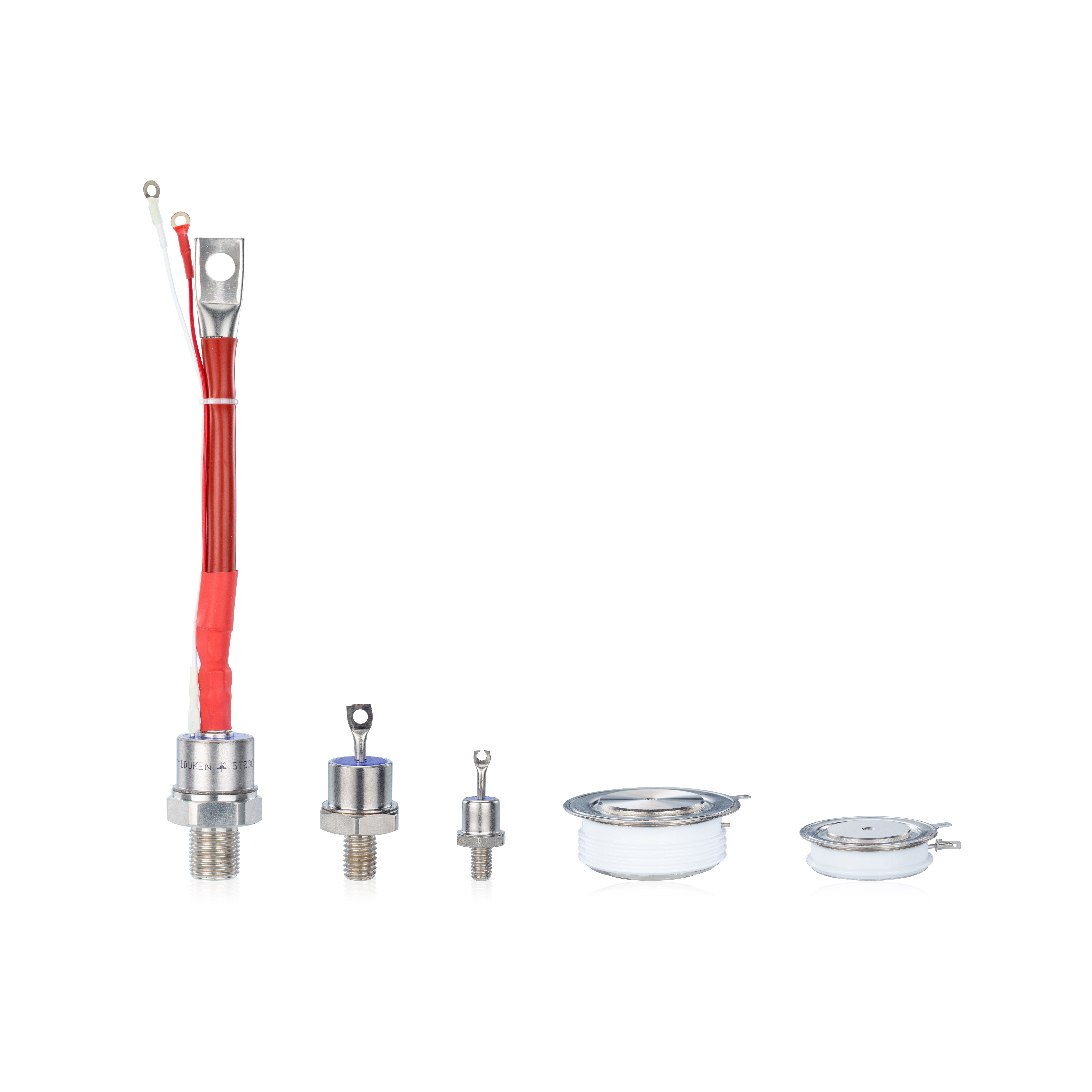
The forward voltage drop of a thyristor contributes directly to conduction losses. Devices with lower on-state voltage, such as the high surge current rating Aluminium housing disc package 700A phase control thyristor, allow large amounts of current to flow with minimal resistive loss.
This translates into better energy use during peak operation. When combined with high surge capabilities, the thyristor can absorb transient overloads without compromising long-term efficiency. Engineers should also focus on maintaining proper clamping force to ensure optimal thermal contact and minimal electrical resistance.
Optimizing busbar design to match the disc package and reduce overall loop inductance further enhances efficiency. Surface flatness, thermal paste uniformity, and even torque distribution are all critical during installation.
Thermal Management: The Invisible Efficiency Factor
Even the most electrically efficient thyristor will fail to deliver if poorly cooled. The Aluminium housing disc package is not just a mechanical form—it’s a thermal solution. Its design enables better heat transfer from the thyristor junction to external heatsinks or liquid cooling loops.
In high-current systems, investing in high-performance thermal interface materials, redundant fan systems, and ambient monitoring can yield measurable efficiency gains. Cooler devices operate closer to their optimal conduction profile, with lower forward voltage and reduced leakage current.
Thermal cycling effects also play a role—consistent cooling minimizes fatigue to bonding wires and interfaces, thereby preserving the thyristor's electrical properties and maintaining its efficiency curve over time.
Firing Angle Control and Power Factor Optimization
Efficiency is also tied to the firing angle in phase control applications. The earlier in the AC cycle a thyristor is triggered, the more energy is delivered to the load. However, incorrect timing can introduce harmonics or waste energy in reactive components.
The datasheet KP700A‑6500V low leakage current 700A phase control thyristor supports stable triggering even in noisy environments. Engineers should ensure accurate gate signal shaping and synchronization with AC zero-crossing points to maximize power factor and minimize harmonic distortion.
Adding gate snubber circuits and surge absorbers at the trigger circuit level further ensures stable conduction, particularly in heavily inductive or rapidly switching systems.
Conclusion
Whether you're designing for continuous operation or variable loads, efficiency is a function of component quality, thermal performance, and smart circuit design. Components like the datasheet KP700A‑6500V low leakage current 700A phase control thyristor and the high surge current rating Aluminium housing disc package 700A phase control thyristor offer the foundational traits necessary for energy-optimized systems.
When deployed correctly, they not only improve system efficiency but also enhance reliability, lower heat dissipation requirements, and extend overall system lifespan. By embracing a holistic view—covering electrical parameters, mechanical integration, and trigger strategy—engineers can unlock maximum potential from every watt in their high-power conversion systems.