Enhancing Reliability and Longevity of 400A Phase Control Thyristors in Power Systems
The 400A phase control thyristor is a vital device in power regulation systems used across industrial automation, metallurgy, and renewable energy. Engineered with high dv/dt immunity, an Aluminium housing disc package, and a high surge current rating, it ensures reliable current control under heavy-duty operating conditions. However, long-term stability is not solely dependent on its inherent design — proper installation, maintenance, and adherence to datasheet KP400A-6500V parameters are equally critical. This article explores how engineers can optimize thyristor reliability, prevent degradation, and achieve consistent performance through design and operational best practices.
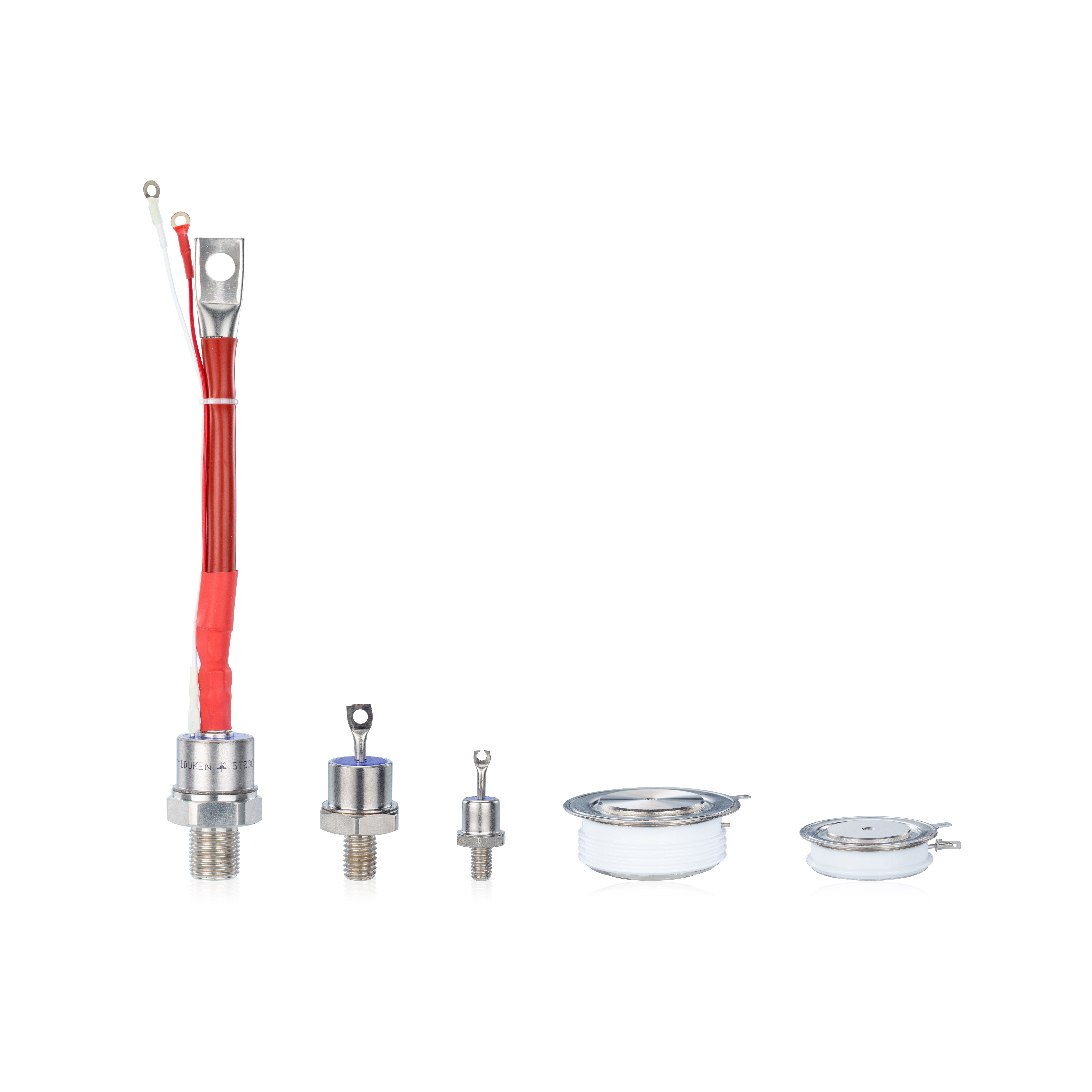
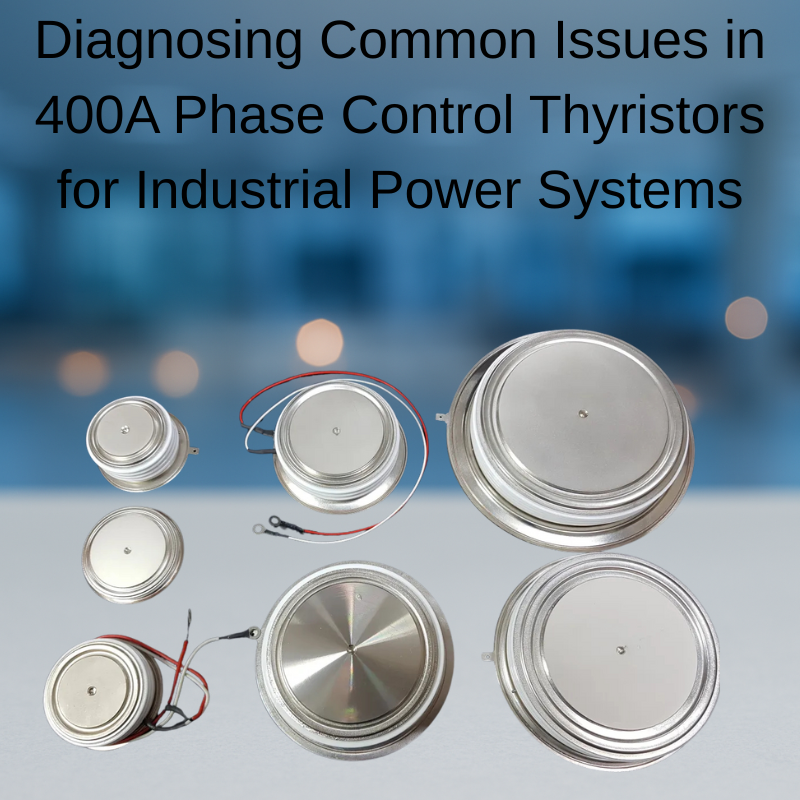
A 400A phase control thyristor operates by switching and regulating large AC currents via controlled gate pulses. Its Aluminium housing disc package allows efficient heat transfer, ensuring the silicon junction remains within thermal limits during repetitive conduction cycles.
The high dv/dt immunity is designed to prevent false triggering when steep voltage transients occur — a common phenomenon in converter circuits and motor drives. Meanwhile, the high surge current rating enables the device to tolerate momentary overloads without junction damage.
Reliability issues typically arise when these protective features are compromised by incorrect installation or circuit design — for example, insufficient gate trigger control current or poor contact between the disc housing and the heat sink.
To fully utilize the device’s rated performance, correct mechanical and electrical setup is essential: Mounting pressure and surface preparation: The Aluminium housing disc package must be clamped evenly using calibrated torque tools. Uneven pressure creates micro air gaps, raising thermal resistance. Cooling system design: Implement uniform airflow or water cooling to maintain consistent junction temperature. Thermal imbalance can lower the high surge current rating over time. Gate driver precision: Ensure that the gate trigger control circuit matches specifications from the datasheet KP400A-6500V. Incorrect gate current or duration may cause incomplete turn-on, resulting in local hot spots. Circuit protection: Add RC snubber networks and surge absorbers to protect against transient voltage spikes that could exceed the high dv/dt immunity threshold.
Each of these measures contributes directly to reducing stress accumulation and ensuring smooth operation during repetitive switching.
Even robust devices like the 400A phase control thyristor require periodic testing and predictive maintenance to detect degradation before failure occurs. Key monitoring strategies include: Thermal pattern inspection: Use thermal imaging to verify even temperature distribution across the Aluminium housing disc package. Leakage current tracking: An increase in off-state current under rated voltage often indicates reduced junction isolation. Gate voltage waveform analysis: Oscilloscope measurements can reveal gate trigger control irregularities that cause misfiring or slow turn-on behavior. dv/dt stress testing: Validate high dv/dt immunity through controlled transient voltage testing to ensure stability under dynamic load transitions.
Real-world case studies have shown that regular inspection following datasheet KP400A-6500V guidance can extend thyristor service life by 40% in heavy-duty rectifier systems.
To enhance long-term performance, engineers should adopt system-level improvements beyond device-level maintenance: Load balancing: Uneven load distribution can overstress specific thyristors in parallel configurations. Thermal redundancy: Incorporating multiple cooling paths ensures continued heat dissipation even if one path fails. Surge limitation: Carefully design the system’s surge protection to stay within the device’s high surge current rating. Digital control integration: Use real-time monitoring and feedback systems to dynamically adjust gate trigger control parameters and maintain consistent conduction angles.
Implementing these methods reduces thermal cycling fatigue and prevents premature degradation, maximizing system reliability.
The reliability and longevity of the 400A phase control thyristor depend on maintaining balance between electrical stability and thermal management. Adhering to datasheet KP400A-6500V specifications for gate trigger control, ensuring mechanical precision in the Aluminium housing disc package, and respecting the device’s high surge current rating are critical for sustained performance.
By combining proactive maintenance, accurate performance monitoring, and circuit-level optimization, engineers can ensure that thyristors maintain their high dv/dt immunity and operational efficiency over extended service lifetimes — even in demanding industrial environments.