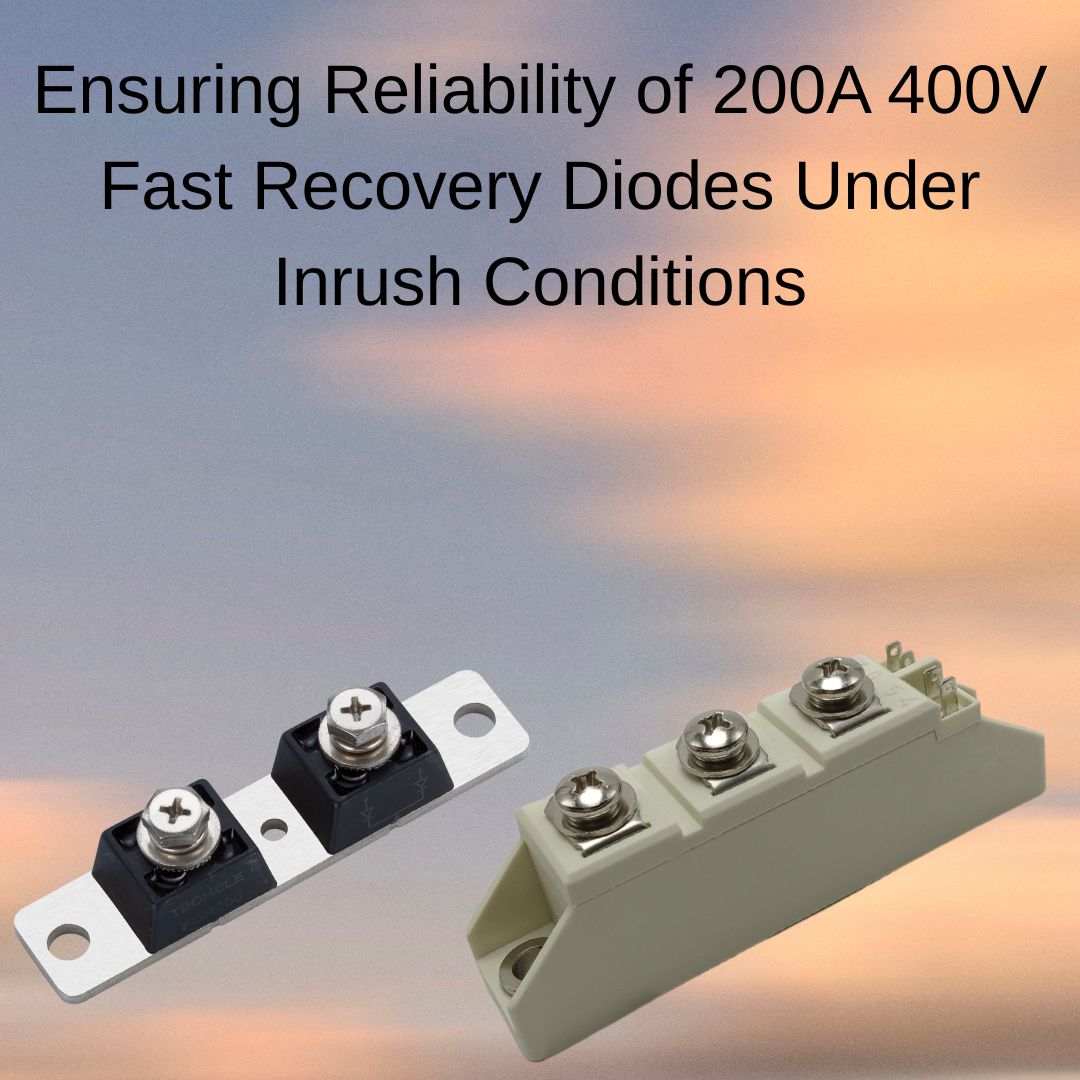
Ensuring Reliability of 200A 400V Fast Recovery Diodes Under Inrush Conditions
Inrush current is a common phenomenon in high-power electronics and can pose significant challenges to 200A 400V fast recovery diodes. These diodes are critical components in rectifiers, solar inverters, and other high-current applications. Ensuring their reliability under inrush conditions requires a comprehensive approach that combines thermal management, system design, and protective measures.
1. The Challenges of Inrush Current
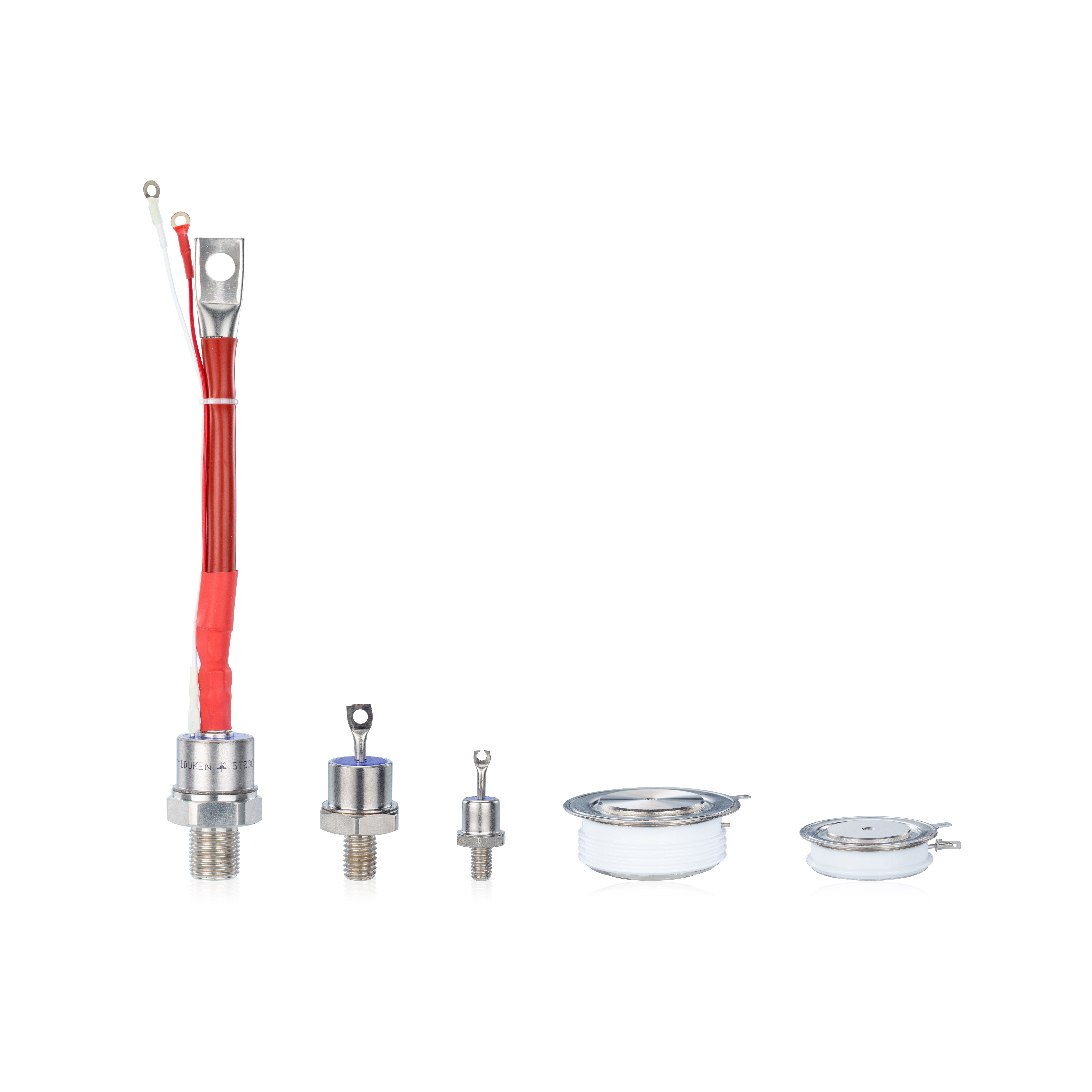
When a system is first powered on, inrush current occurs as the current quickly rises to its peak before settling to steady-state levels. For high power rectifier high repetition rate switching stud mount 200A 400V fast recovery diode systems, inrush currents can be several times higher than normal operating currents.
Thermal Stress: Sudden spikes in current generate rapid heating in the diode junction. Without adequate cooling, this can lead to thermal damage.
Electrical Stress: High transient currents can induce voltage spikes, which may exceed the diode's voltage rating and cause failure.
Repeated Stress: Systems that power on frequently subject diodes to repeated inrush events, compounding thermal and electrical stress.
2. Thermal Management Solutions
Proper thermal management is essential for ensuring that 200A 400V fast recovery diodes can handle inrush currents safely:
Water-Cooled Heatsinks: For high reliability high surge current water-cooled heatsink assembly 200A 400V fast recovery diode systems, water-cooled heatsinks effectively dissipate heat, reducing junction temperature rise during inrush events.
Thermal Interface Materials (TIMs): Using high-quality thermal pads or grease ensures efficient heat transfer from diode to heatsink, minimizing thermal resistance.
Active Cooling: Supplementing passive cooling with fans or thermoelectric coolers can help maintain safe operating temperatures during repeated inrush events.
3. Circuit Design and Mitigation Techniques
Engineers can implement several design strategies to mitigate the impact of inrush current on 200A 400V fast recovery diodes:
Soft-Start Circuits: Gradually ramping the applied voltage reduces the magnitude of inrush current and prevents thermal and electrical overstress.
Current-Limiting Components: Series resistors or inductors can temporarily limit peak inrush currents.
Surge Protection Devices: Varistors and transient voltage suppressors (TVS) protect the diode from voltage spikes associated with inrush events. These measures are particularly important in for solar inverter low conduction loss stud mount 200A 400V fast recovery diode systems.
4. System-Level Considerations
Optimizing the overall system layout and component selection can significantly improve the diode’s ability to withstand inrush current:
Component Placement: Positioning the diode near heat sinks and optimizing airflow ensures efficient heat dissipation.
PCB Layout: Wide traces and properly designed vias reduce resistance and prevent localized heating during inrush.
Integrated Monitoring: Temperature and current sensors allow real-time monitoring, enabling adaptive system responses to protect the diode during high-current events.
5. Simulation and Validation
Before deploying systems, simulation and validation are crucial for confirming that diodes can withstand inrush current:
Thermal Simulation: Using finite element analysis (FEA) to model the diode and heatsink under peak inrush conditions helps identify potential hotspots.
Real-World Testing: Empirical testing with thermocouples and thermal imaging ensures that diodes operate within safe temperature limits.
Iterative Optimization: Adjusting cooling and circuit design based on simulation and testing results maximizes diode reliability.
6. Conclusion
200A 400V fast recovery diodes can safely handle inrush current if appropriate design and protection measures are implemented. Combining soft-start circuits, current-limiting devices, surge protection, robust thermal management, and system-level monitoring ensures reliable operation in high-power applications. By addressing both thermal and electrical stresses, engineers can extend the lifespan of these diodes and improve the overall reliability of rectifiers, solar inverters, and other high-current systems.