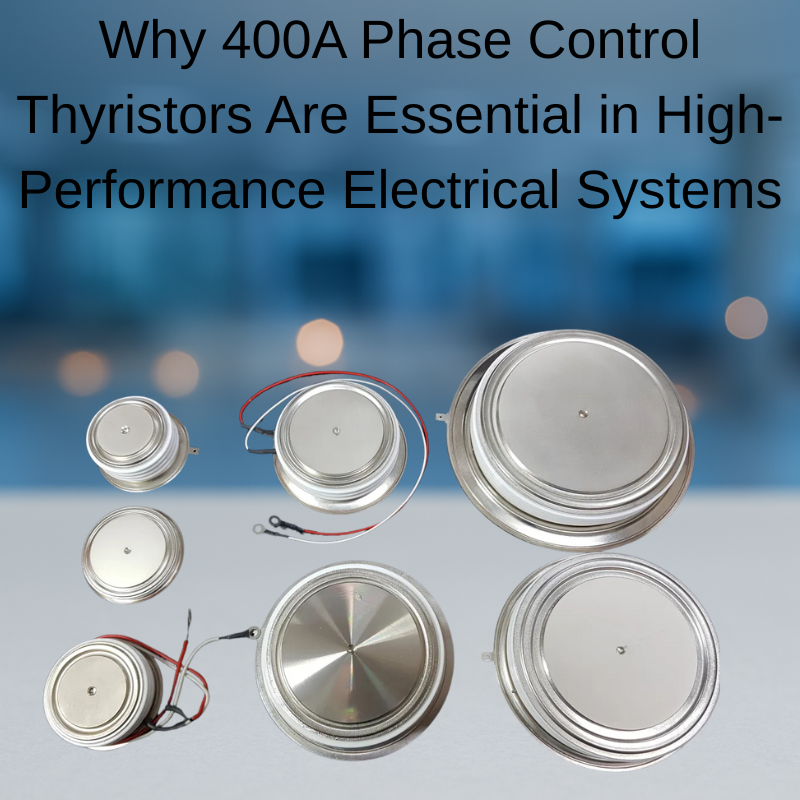
Environmental Effects on 500A Phase Control Thyristor Longevity
Introduction
The 500A phase control thyristor is known for its ruggedness and reliability in high-power applications. However, environmental conditions can have a significant impact on the device's long-term stability and efficiency. From temperature fluctuations to airborne contaminants, several factors must be managed to maximize thyristor lifespan and ensure stable operation.
Temperature Range Extremes
These thyristors are designed for an extended temperature range (–40°C to +85 °C), but consistent operation at the extremes—especially near the upper limit—can still accelerate material fatigue. High temperatures increase leakage currents, reduce switching efficiency, and stress internal junctions.
Proper ventilation, system insulation, and use of temperature-controlled enclosures help manage ambient conditions. Real-time thermal monitoring is essential in installations located outdoors or near high-temperature machinery.
Even though high thermal stability is built into the 500A thyristor, its effectiveness is only as good as the system’s ability to maintain manageable operating conditions.
High Surge Environments
Industrial systems often experience power surges from load startups or grid disturbances. The high surge current rating of the thyristor allows it to tolerate occasional spikes. However, repeated surge exposure without sufficient cooldown can degrade performance.
This degradation may not be immediately visible but can manifest later through inconsistent conduction or voltage drop anomalies. Surge arrestors and energy buffers should be implemented to shield the thyristor from excess stress.
Routine surge profiling can also help correlate degradation with event frequency and intensity, providing a feedback loop for improving surge management.
Voltage Transients and dv/dt Risks
Harsh environments also amplify electrical noise, increasing the likelihood of high dv/dt conditions. The high dv/dt immunity of 500A thyristors minimizes the risk of false triggering, but this protection has physical limits.
Humidity, salt fog, or conductive dust can create leakage paths that compromise dv/dt shielding. Over time, these paths can erode the insulation needed to maintain gate control.
To counteract this, engineers should enforce maintenance schedules that include cleaning and inspecting boards, gate drivers, and insulative coatings.
Contaminants and Internal Leakage
Airborne particles such as metallic dust or moisture can find their way into enclosures, where they settle on PCBs and semiconductors. This can reduce low leakage current performance over time, leading to premature failure.
Protective conformal coatings and IP-rated housings are useful but should be periodically tested. If leakage measurements are rising, it may indicate that contaminants are compromising junction integrity.
Additionally, exceeding the high junction temperature tolerance due to poor ventilation or component clustering can catalyze failure when combined with environmental stress.
Summary
Even robust devices like the 500A phase control thyristor need environmental consideration. From temperature extremes to high humidity, external conditions can erode even the best-designed power electronics if not actively managed. Maintaining clean environments, stable voltage supplies, and effective cooling ensures that thyristors deliver long-term, reliable service.