Fault Diagnosis and Recovery Techniques for 400A Phase Control Thyristors
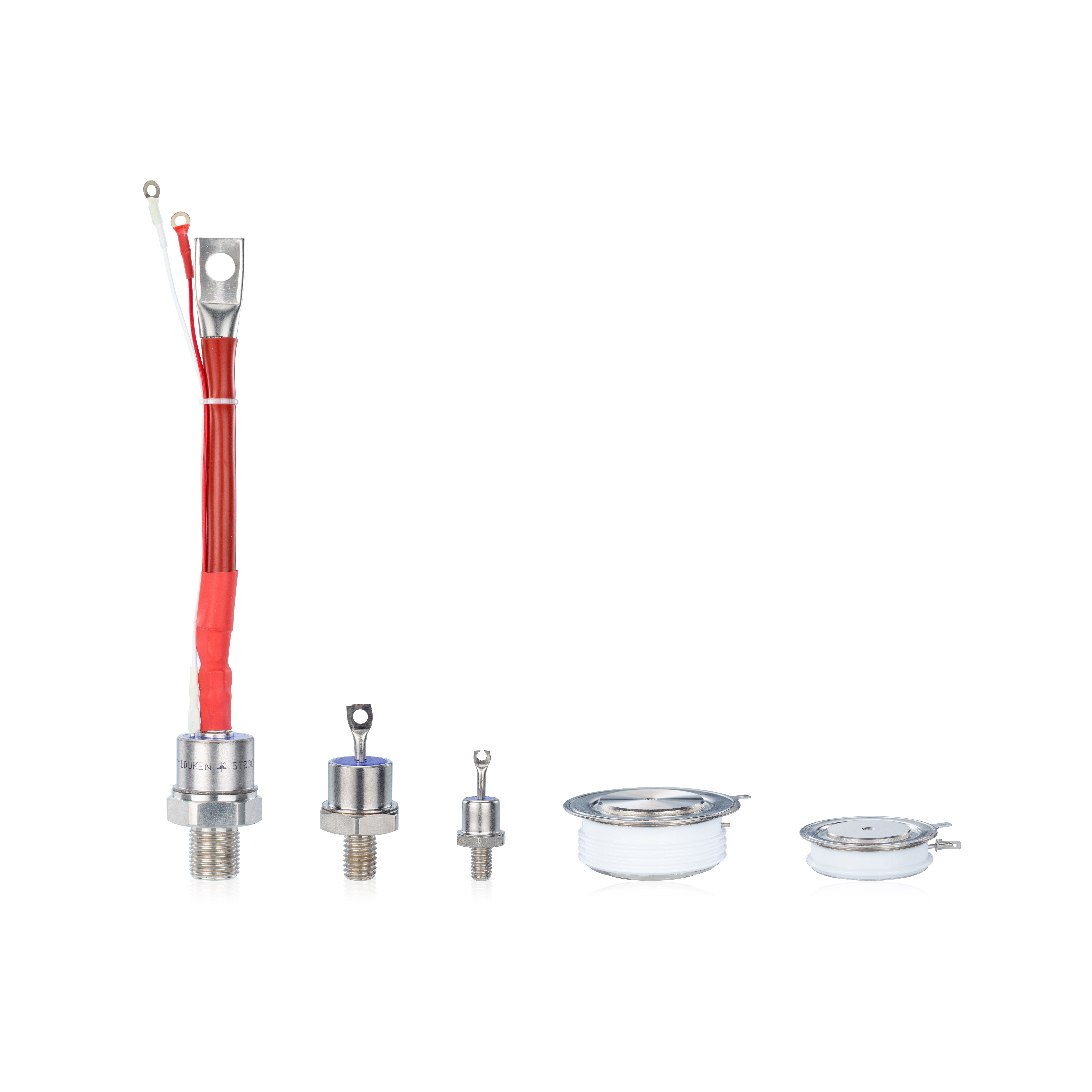
The 400A phase control thyristor is a cornerstone of industrial power electronics, designed to handle high voltage, large currents, and repetitive switching operations. With features such as high dv/dt immunity, durable Aluminium housing disc package, and superior high surge current rating, it delivers robust performance in converters, induction heaters, and DC drives. However, like any semiconductor device, operational faults may occur due to overstress, mis-triggering, or poor thermal management. Understanding how to identify, analyze, and recover from these issues is essential to ensuring system longevity and safety.
A variety of failure modes can occur in 400A phase control thyristors, often stemming from mechanical, electrical, or thermal stress factors: Gate trigger failure: Insufficient or inconsistent gate trigger control voltage prevents proper device activation. This can lead to partial conduction and heat concentration near the gate region. dv/dt-induced triggering: Even with high dv/dt immunity, excessive voltage gradients can inadvertently turn on the device, especially if snubber networks are missing or defective. Thermal runaway: The Aluminium housing disc package dissipates heat efficiently, but improper clamping pressure or contamination between surfaces can cause localized overheating. High surge current stress: Repeated surge events beyond the rated high surge current rating can degrade internal junctions and solder bonds, eventually leading to failure.
In one industrial test, an engineer observed repeated device failures during transient current peaks. Review of the datasheet KP400A-6500V revealed that actual surge conditions exceeded the rated limit by 15%, leading to cumulative damage to the silicon junction.
When a 400A phase control thyristor exhibits erratic performance, systematic testing should be carried out to confirm the cause: Gate performance testing: Apply calibrated gate trigger control pulses as specified in the datasheet KP400A-6500V. Measure gate voltage waveform consistency and response delay using an oscilloscope. Reverse blocking test: Verify off-state leakage current under rated reverse voltage to evaluate junction integrity. Thermal inspection: Use infrared imaging to detect uneven heat distribution across the Aluminium housing disc package. Hot spots typically indicate poor contact or insufficient torque. dv/dt stress simulation: Apply controlled high-rate voltage transitions to confirm high dv/dt immunity compliance under dynamic load conditions.
While some thyristor failures are irreversible, many operational faults can be mitigated or prevented through proper maintenance and circuit design improvements: Gate drive optimization: Adjust driver circuit resistance and pulse amplitude based on datasheet KP400A-6500V guidelines to maintain stable conduction. Surface reconditioning: Clean and polish the Aluminium housing disc package contact area to restore thermal conductivity. Use high-grade thermal paste to reduce interface resistance. dv/dt protection: Install RC snubber networks to suppress transient spikes and preserve high dv/dt immunity under fast-switching loads. Thermal and surge control: Ensure that cooling systems maintain uniform temperature and that current surges never exceed the high surge current rating.
One example from a rectifier upgrade project showed that simply recalibrating the gate trigger control and replacing aged clamps improved thyristor efficiency by 20% while eliminating unintentional triggering events.
A mining operation’s DC drive rectifier experienced multiple thyristor breakdowns within six months. Investigations revealed improper mounting torque on the Aluminium housing disc package, leading to partial contact and uneven cooling. Additionally, the gate trigger control pulses were delayed due to degraded driver components. After aligning the mounting procedure, improving gate drive synchronization, and ensuring proper snubber circuit installation, the 400A phase control thyristor operated flawlessly for over 10,000 hours under continuous duty.
This case demonstrates the importance of integrating datasheet KP400A-6500V recommendations into real-world maintenance routines.
Effective fault diagnosis and recovery of the 400A phase control thyristor depend on combining electrical testing, mechanical inspection, and thermal management. Maintaining high dv/dt immunity, observing high surge current rating limits, and ensuring clean mounting surfaces on the Aluminium housing disc package are essential for reliable performance. Engineers should always use the datasheet KP400A-6500V as a reference for accurate gate trigger control and parameter optimization. By adopting preventive measures and structured fault analysis, system reliability and operational efficiency can be significantly enhanced.