
Key Factors Impacting Efficiency in 700A Phase Control Thyristor Applications
As industries continue to demand reliable high-power solutions, maximizing efficiency in semiconductor components becomes a core engineering objective. The 700A phase control thyristor stands out as a versatile and durable component for applications involving power rectification, voltage control, and switching. This article examines critical design elements that influence the energy efficiency of systems built around 700A thyristors.
Optimizing Component Choice for Energy Savings
At the center of any efficient thyristor system is the component itself. The datasheet KP700A‑6500V low leakage current 700A phase control thyristor is built to operate in high-stress environments with minimal energy loss.
Its ability to handle up to 6500V in reverse voltage ensures system stability under extreme conditions. Even more importantly, its low leakage current contributes directly to reduced power waste during idle periods or when the device is in the blocking state.
Careful reading of the datasheet allows engineers to align device ratings with their application's voltage, current, and switching demands, thereby reducing over-engineering and associated energy inefficiencies.
Conduction Path Integrity and Loss Minimization
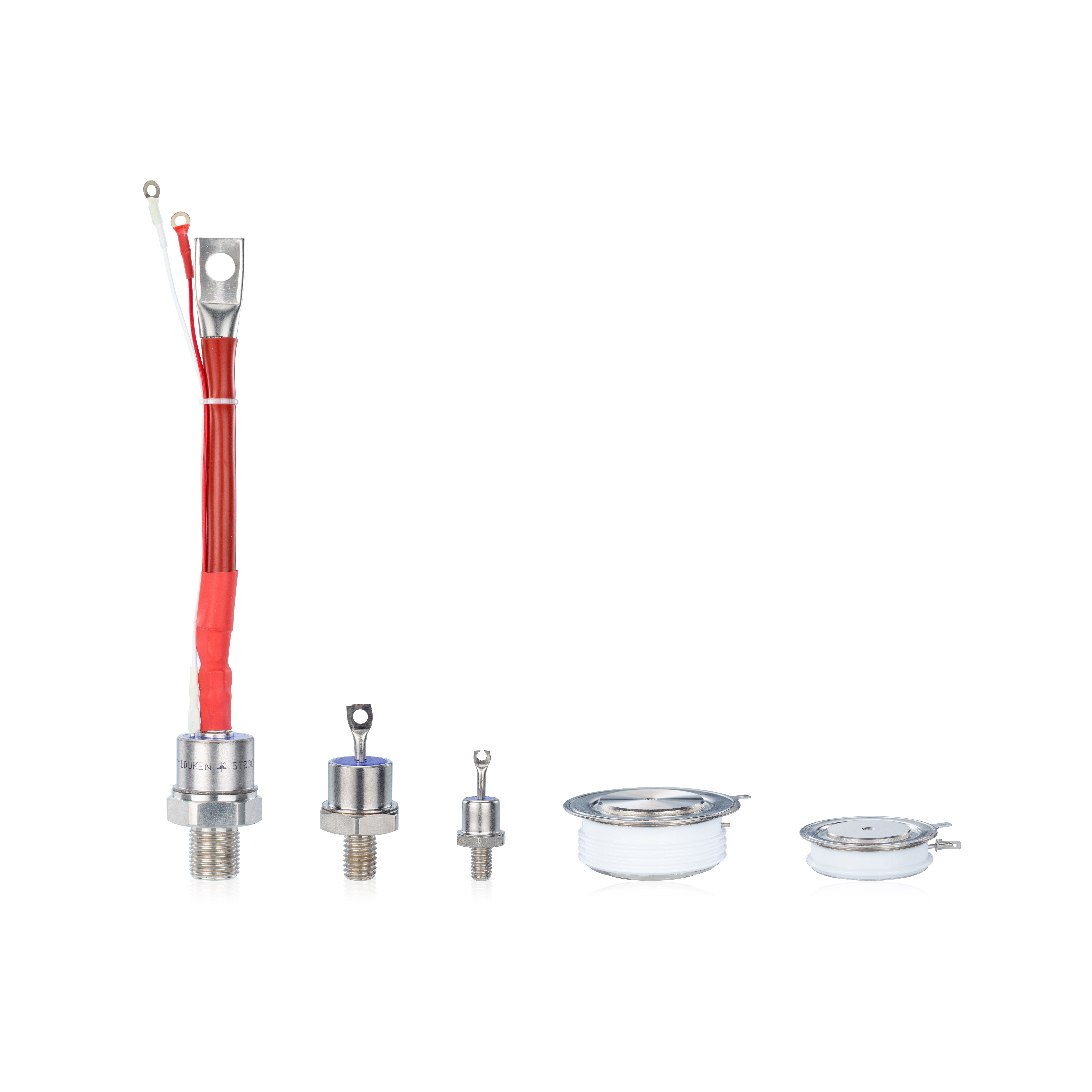
Conductive efficiency is another major factor. Once turned on, the thyristor conducts heavy loads, and resistance in the path becomes a prime contributor to loss. The high surge current rating Aluminium housing disc package 700A phase control thyristor provides an edge with its efficient thermal design and low-contact resistance.
This packaging is ideal for reducing I²R losses, particularly in pulse-heavy or surge-prone environments. Moreover, engineers should reinforce conductor paths with wide copper traces or laminated busbars and minimize sharp turns that increase inductance and thermal hotspots.
Thermal Management and System Efficiency
Heat is the enemy of electrical efficiency. Even small increases in junction temperature can result in higher forward voltage drops and leakage currents, which compound over time. The Aluminium housing disc package offers a robust heat transfer interface that, when paired with appropriate cooling, can significantly reduce thermal losses.
Designers should utilize high-quality thermal paste, avoid over- or under-torqueing during mounting, and provide ventilation paths for consistent airflow. In mission-critical systems, thermal monitoring and adaptive fan speeds help maintain optimal operating conditions and maximize long-term device efficiency.
Gate Drive Design and Switching Strategy
A frequently overlooked area in efficiency tuning is gate drive performance. Erratic gate signals can lead to partial conduction, false triggering, or premature switching—all of which waste energy. The datasheet KP700A‑6500V low leakage current 700A phase control thyristor responds best to sharp, consistent gate pulses.
Engineers should implement gate drivers with strong isolation, minimal propagation delay, and programmable pulse width. Triggering at the ideal phase angle ensures minimal harmonic distortion and better utilization of input energy.
Smart gate controls integrated with system-level feedback loops can dynamically adjust conduction times based on real-time load demands, further enhancing operational efficiency.
Conclusion
Achieving optimal efficiency in 700A thyristor-based systems is a multifaceted challenge that involves proper device selection, thermal control, precise circuit design, and intelligent triggering. Devices like the datasheet KP700A‑6500V low leakage current 700A phase control thyristor and the high surge current rating Aluminium housing disc package 700A phase control thyristor offer engineers a solid foundation to build high-efficiency power conversion solutions.
By addressing these key factors during the design phase, industries can reduce power loss, extend equipment lifespan, and move closer to achieving sustainable, energy-efficient operation in even the most demanding applications.