Leveraging Screw-Mount Low Rth(j-c) 106A Thyristor Modules in Electrolysis Rectifier Upgrades
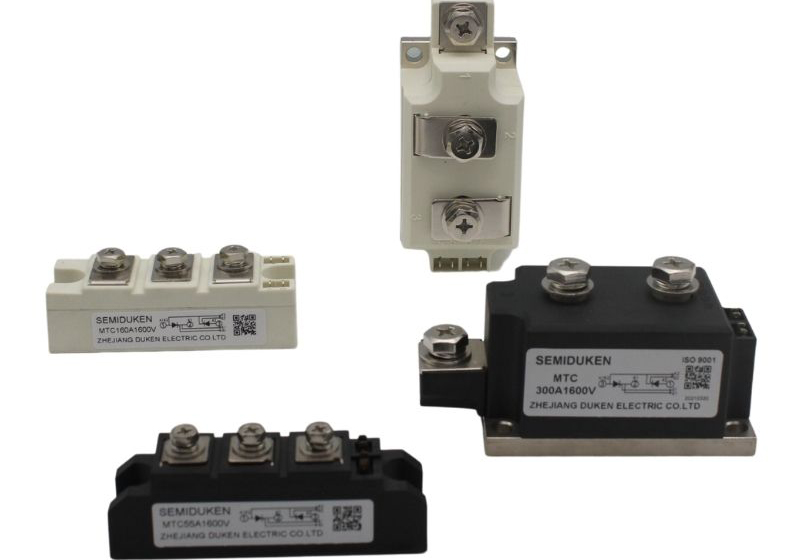
As electrolysis technologies evolve, engineers are upgrading legacy rectifier systems to improve thermal performance and energy efficiency. Among the most recommended components for this task is the screw-mount certified low Rth(j-c) 106A thyristor module for UPS systems — a versatile and durable solution designed to minimize thermal resistance, support easy mechanical installation, and meet industrial certification standards.
This article explores how this specific thyristor module enhances rectifier upgrades and supports long-term operational stability in electrochemical applications.
Understanding the Rth(j-c) Factor in Rectifier Design
Rth(j-c) — or junction-to-case thermal resistance — is a critical value in power electronics. It defines how effectively heat is transferred from the silicon junction of the device to its case. Lower Rth(j-c) leads to:
Lower junction temperatures during operation
Improved thermal cycling endurance
Reduced risk of thermal runaway under load
The screw-mount certified low Rth(j-c) 106A thyristor module for UPS systems excels in this regard, making it ideal for high-current, continuous-duty electrolysis operations.
Key Advantages of Screw-Mount Thyristor Modules
1. Mechanical Robustness & Easy Installation
The screw-mount design allows for:
Secure and vibration-resistant installation
Easy replacement during maintenance
Uniform pressure across the module for consistent thermal contact
Electrolysis plants with tight maintenance windows benefit from the fast and reliable installation of screw-mounted modules.
2. Certified Quality and Safety
This 106A thyristor module is often manufactured to meet industrial certifications such as:
IEC 60747 for power semiconductors
UL or CE safety compliance
Rigorous in-house QA for surge endurance and thermal shock
Certifications make integration smoother during audits or compliance checks in regulated industries.
3. Thermal Efficiency
Thanks to its low Rth(j-c) characteristics, the module:
Operates cooler under full load
Reduces dependence on large external heatsinks
Extends the service life of both the module and surrounding components
This leads to improved uptime and reduced total cost of ownership.
Recommended Installation Practices
1. Heatsink Selection
Choose a polished, anodized aluminum heatsink with rated dissipation
Use thermal grease or pad to reduce interface resistance
Verify thermal interface pressure with torque-controlled screwdrivers
The screw-mount certified low Rth(j-c) 106A thyristor module for UPS systems should achieve even surface contact to fully realize its low thermal resistance potential.
2. Gate and Power Wiring
Use twisted, shielded cables for the gate circuit
Avoid sharp bends in power lines
Include dv/dt snubber circuits where fast switching occurs
Ensure EMI compliance for installations in sensitive environments.
Maintenance and Monitoring Tips
Check torque tightness every 6–12 months to prevent loosening due to thermal cycling
Use IR thermography to monitor case temperature rise
Compare on-state VT measurements over time to detect module degradation
Despite its rugged construction, monitoring ensures maximum system reliability.
Suitable Applications
This module fits a wide range of electrolysis-related upgrades:
Hydrogen production facilities needing fast-switching rectifiers
Metal electro-winning with long-duration current exposure
Battery-grade chemical synthesis where thermal balance is essential
The screw-mount certified low Rth(j-c) 106A thyristor module for UPS systems ensures stable operation and long component life across all these scenarios.
Conclusion
If you are upgrading your electrolysis rectifiers for higher thermal performance, durability, and ease of installation, the screw-mount certified low Rth(j-c) 106A thyristor module for UPS systems is a high-value choice. Its thermal efficiency, certification, and mounting convenience make it well-suited for industrial processes requiring precision and resilience.