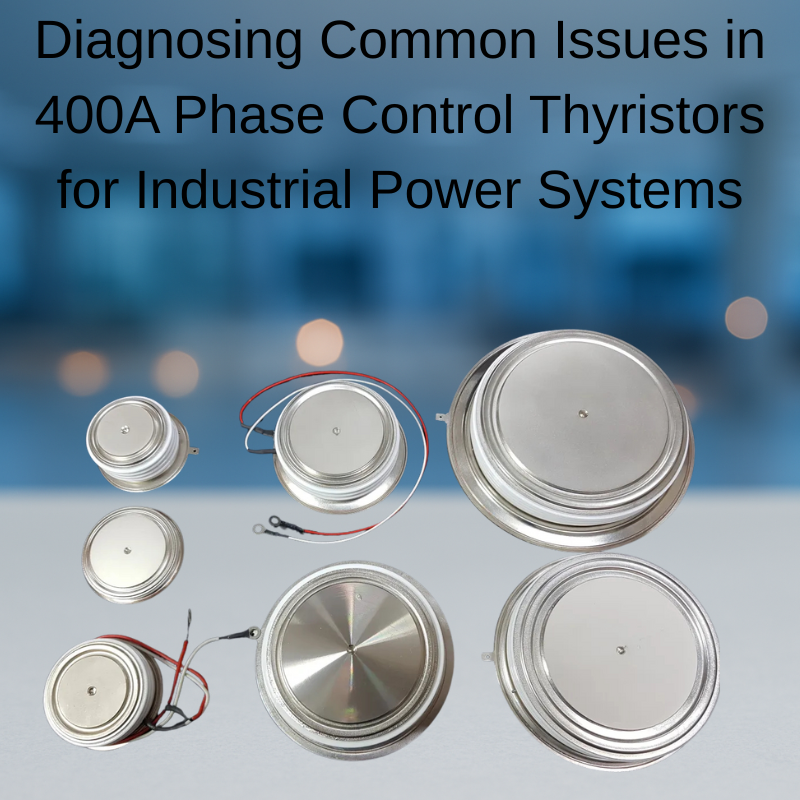
Preventing Performance Degradation in 600A Phase Control Thyristors
The 600A phase control thyristor is a core component in high-power converters, rectifiers, and industrial drives. Its design ensures high thermal stability, high surge current rating, and high dv/dt immunity, making it ideal for systems that demand reliable control under stress. Additionally, its extended temperature range (–40°C to +85 °C) and low leakage current guarantee operation across varying environmental conditions. However, prolonged exposure to high electrical and thermal loads can lead to gradual degradation, reducing device performance over time. This article examines common causes of degradation and outlines preventive measures to maintain reliability and longevity.
Performance degradation in a 600A phase control thyristor typically results from thermal, electrical, or environmental stress. Thermal fatigue: Even with high thermal stability, repeated thermal cycling can cause expansion and contraction of internal junctions, leading to microcracks in solder layers. Overcurrent stress: Surpassing the high surge current rating during startup or fault conditions can permanently alter the thyristor’s current-carrying capability. Voltage transients: Although the device features high dv/dt immunity, excessive transient spikes may induce partial breakdown or premature triggering. Environmental contamination: Dust or moisture can increase surface conductivity, reducing low leakage current performance and insulation resistance. Maintaining operation within the extended temperature range (–40°C to +85 °C) minimizes these degradation effects.
Detecting early-stage degradation allows engineers to intervene before failure occurs. The following tests are recommended: Leakage current measurement: A steady increase in off-state current signals surface degradation or contamination. A healthy low leakage current 600A phase control thyristor should maintain consistent readings over time. Thermal inspection: Using an infrared imager, monitor surface temperature under full load. Uneven heat distribution indicates poor contact or reduced high thermal stability. dv/dt performance verification: Evaluate the device’s response to transient voltages. Any premature triggering suggests declining high dv/dt immunity. Junction temperature tracking: During stress testing, ensure the junction remains below rated limits to preserve high junction temperature tolerance and extend operational life.
To prevent degradation, system designers and maintenance engineers should implement the following measures: Optimized cooling systems: Ensure adequate air or liquid cooling to sustain high thermal stability even at maximum rated load. Surge control circuits: Add snubbers and surge suppressors to protect against spikes that may exceed high dv/dt immunity thresholds. Environmental protection: Use conformal coatings to preserve low leakage current levels in humid or dusty environments. Routine testing and calibration: Verify gate drive circuits regularly to prevent overtriggering that could compromise the high surge current rating. Thermal management under varying climates: Respect the extended temperature range (–40°C to +85 °C) during installation and operation, especially in outdoor systems. These measures significantly reduce the risk of long-term electrical drift and mechanical fatigue.
A steel furnace plant observed a 20% failure rate among 600A phase control thyristors after six months of operation. Investigation revealed cooling ducts clogged with dust, reducing high thermal stability. Furthermore, transient voltages in the system exceeded high dv/dt immunity levels during power fluctuations. After implementing advanced cooling fans and installing surge snubber networks, leakage current dropped by 35%, restoring reliable operation within the extended temperature range (–40°C to +85 °C).
Maintaining the performance and reliability of 600A phase control thyristors depends on proactive maintenance and system optimization. Ensuring high thermal stability, monitoring low leakage current, and safeguarding high dv/dt immunity protect against degradation. By adhering to rated high surge current and extended temperature range (–40°C to +85 °C) parameters, engineers can significantly extend the service life of thyristors used in industrial power applications.