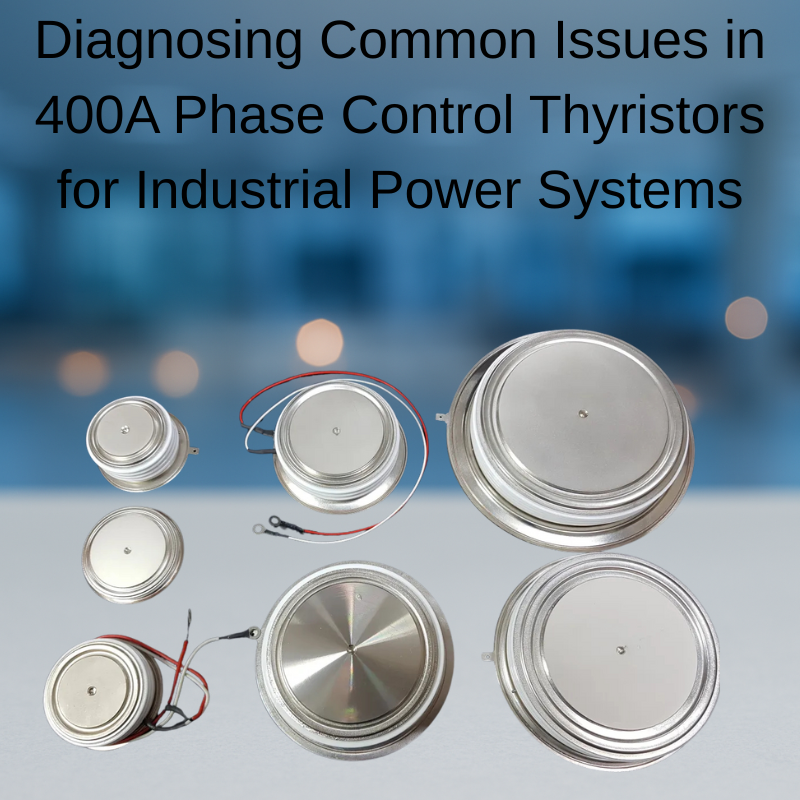
Preventing Thermal and Electrical Failures in 400A Phase Control Thyristors
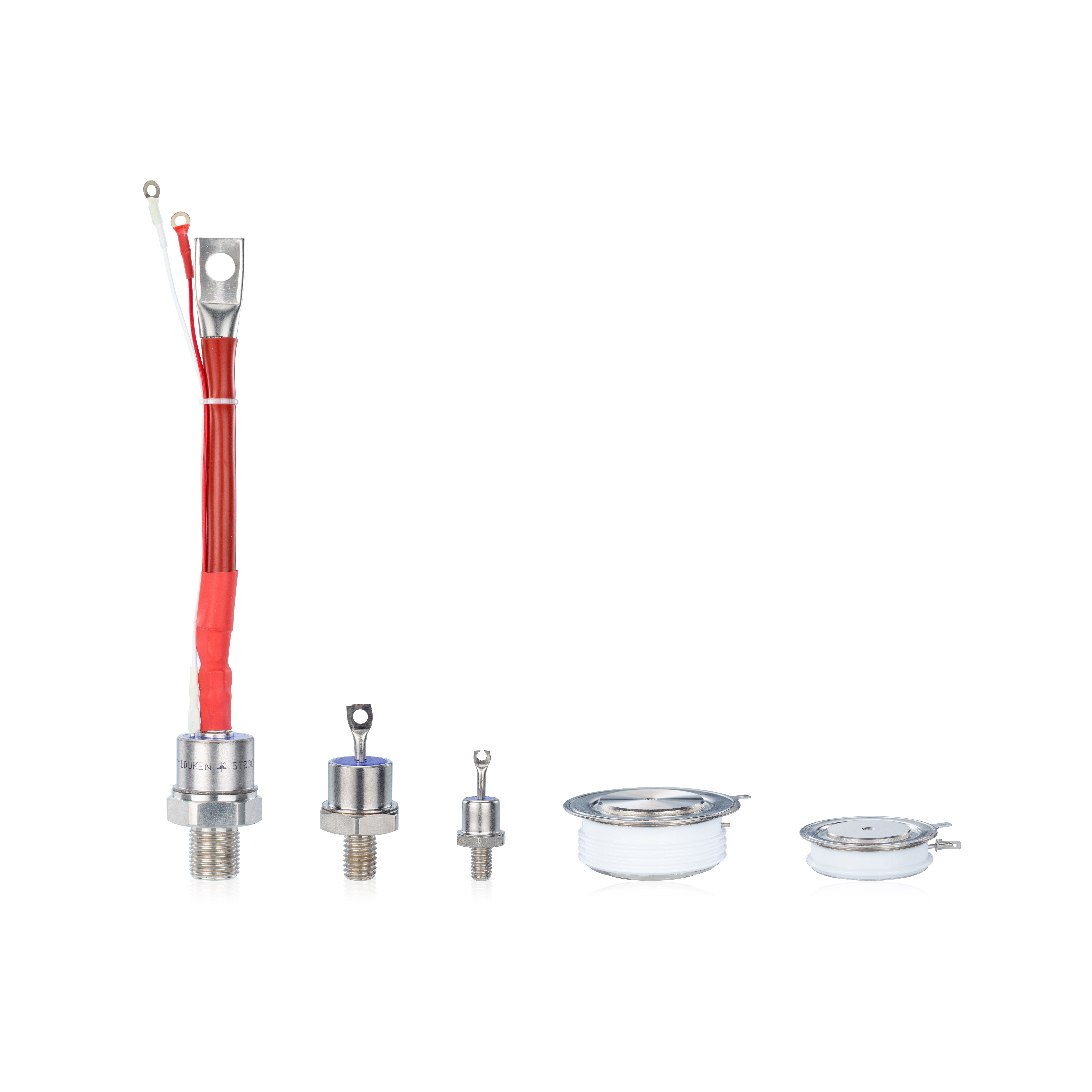
The 400A phase control thyristor plays a critical role in controlling high-power AC systems such as rectifiers, voltage regulators, and motor soft starters. Its rugged design, featuring high dv/dt immunity, a durable Aluminium housing disc package, and a high surge current rating, enables it to withstand extreme electrical and thermal stress. However, improper handling, insufficient cooling, or incorrect gate trigger control can lead to premature device failure. This article explores key diagnostic techniques and preventive strategies for ensuring the long-term reliability of thyristors based on the datasheet KP400A-6500V specifications.
The high dv/dt immunity of a 400A phase control thyristor determines its ability to resist unintentional triggering caused by rapid voltage changes. Industrial converters often operate under fast transients; without proper dv/dt protection, false conduction can damage the gate structure. The Aluminium housing disc package not only provides excellent electrical insulation but also acts as a thermal bridge, dissipating heat efficiently during high-current operation.
A common mistake in installations is neglecting surface flatness and pressure uniformity when clamping the Aluminium housing disc package. Uneven force or contamination at the contact interface can compromise the high surge current rating, creating localized hot spots and eventual junction breakdown.
Electrical failures in 400A phase control thyristors usually manifest as short circuits, untriggered conduction, or leakage current increase. Here’s how to diagnose them effectively: Gate trigger verification: According to the datasheet KP400A-6500V, apply the recommended pulse current and voltage to the gate terminal. If conduction does not occur, inspect for open gate leads or damaged gate-cathode junctions. Reverse blocking test: Measure off-state current at rated reverse voltage. An abnormal reading may indicate a compromised junction due to excessive reverse recovery stress or poor high dv/dt immunity. Thermal stability test: Operate the thyristor near its rated temperature limit and monitor current stability. Fluctuations suggest degraded internal bonding or poor heat transfer through the Aluminium housing disc package.
In many cases, issues can be traced back to an imbalance between gate trigger control parameters and circuit impedance.
To avoid repetitive failures, maintenance engineers should focus on consistent gate trigger control calibration and environmental management: Adhere to datasheet values: The datasheet KP400A-6500V defines optimal gate trigger current and voltage. Over-triggering leads to excessive gate heating, while under-triggering causes partial conduction and local hot spots. Enhance cooling efficiency: Ensure that the Aluminium housing disc package is firmly clamped with a flat, clean interface and that the cooling system maintains uniform temperature distribution. Improve circuit protection: Install RC snubbers and MOVs to protect against high-frequency transients and support the device’s high dv/dt immunity. Verify surge ratings: When using the 400A phase control thyristor in circuits with repetitive current pulses, confirm that each cycle remains within its high surge current rating.
A steel manufacturing plant reported intermittent failures in a heating control unit using 400A phase control thyristors. Investigation revealed irregular contact pressure on the Aluminium housing disc package, reducing heat transfer efficiency. Additionally, gate trigger control pulses were set below the minimum current defined in the datasheet KP400A-6500V. After re-torquing clamps and recalibrating gate drivers, the system restored normal operation, demonstrating the importance of both mechanical and electrical precision.
Long-term performance of the 400A phase control thyristor depends on maintaining the delicate balance between electrical protection and thermal design. Ensuring high dv/dt immunity, proper gate trigger control, and optimal contact in the Aluminium housing disc package is essential for preventing breakdowns. Engineers should reference the datasheet KP400A-6500V to match control parameters with application requirements and respect the high surge current rating limits. With systematic inspection and preventive maintenance, these devices can operate reliably in demanding industrial conditions.