The Role of Voltage and Current Ratings in Designing Reliable 106A Thyristor Modules for UPS Systems
In UPS (Uninterruptible Power Supply) engineering, ensuring reliable power delivery hinges on components that can operate within well-defined electrical boundaries. Among these components, thyristor modules play a vital role in managing AC-to-DC transitions, load regulation, and protection against power anomalies. This article investigates how voltage and current ratings impact the performance and longevity of 106A thyristor modules in UPS systems, offering practical insight for system designers.
1. Voltage Ratings: What They Really Mean
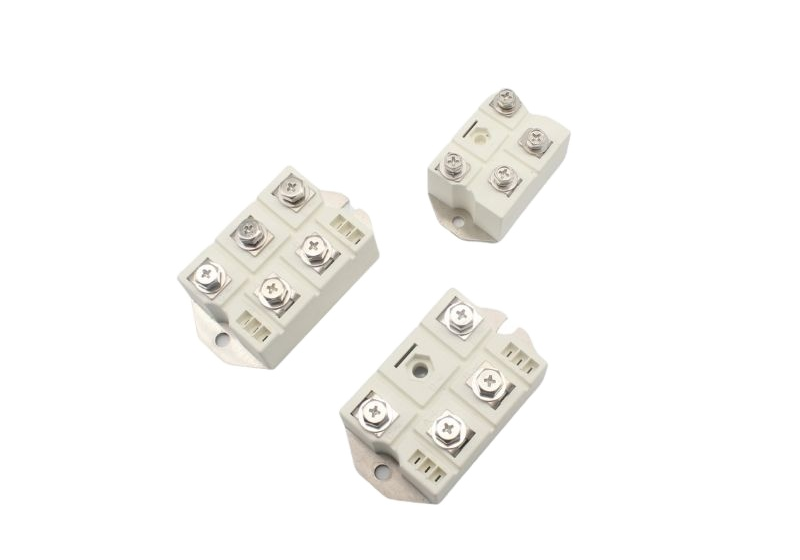
Voltage ratings in thyristor modules define how much potential difference the device can withstand across its terminals without breakdown. The surge-protection low forward-voltage phase-angle-control 106A thyristor module for ups systems is designed with high repetitive peak off-state and reverse voltages, offering dependable insulation and blocking characteristics even in transient-prone environments.
This high-voltage resilience ensures uninterrupted operation during voltage fluctuations, grid switching, or lightning-induced surges. The built-in surge-protection further elevates the module’s reliability by actively suppressing spikes that could compromise downstream circuitry.
The low forward-voltage characteristic reduces conduction losses during operation, making this module ideal for energy-conscious UPS designs. Additionally, phase-angle-control capability provides smooth current ramp-up, reducing stress on both the thyristor and connected loads during power transitions.
2. Interpreting the 106A Current Rating
The current rating of 106A refers to the module’s average forward current under specified thermal and electrical conditions. This is not just a static value—it reflects the module’s ability to sustain power delivery during peak demand without overheating.
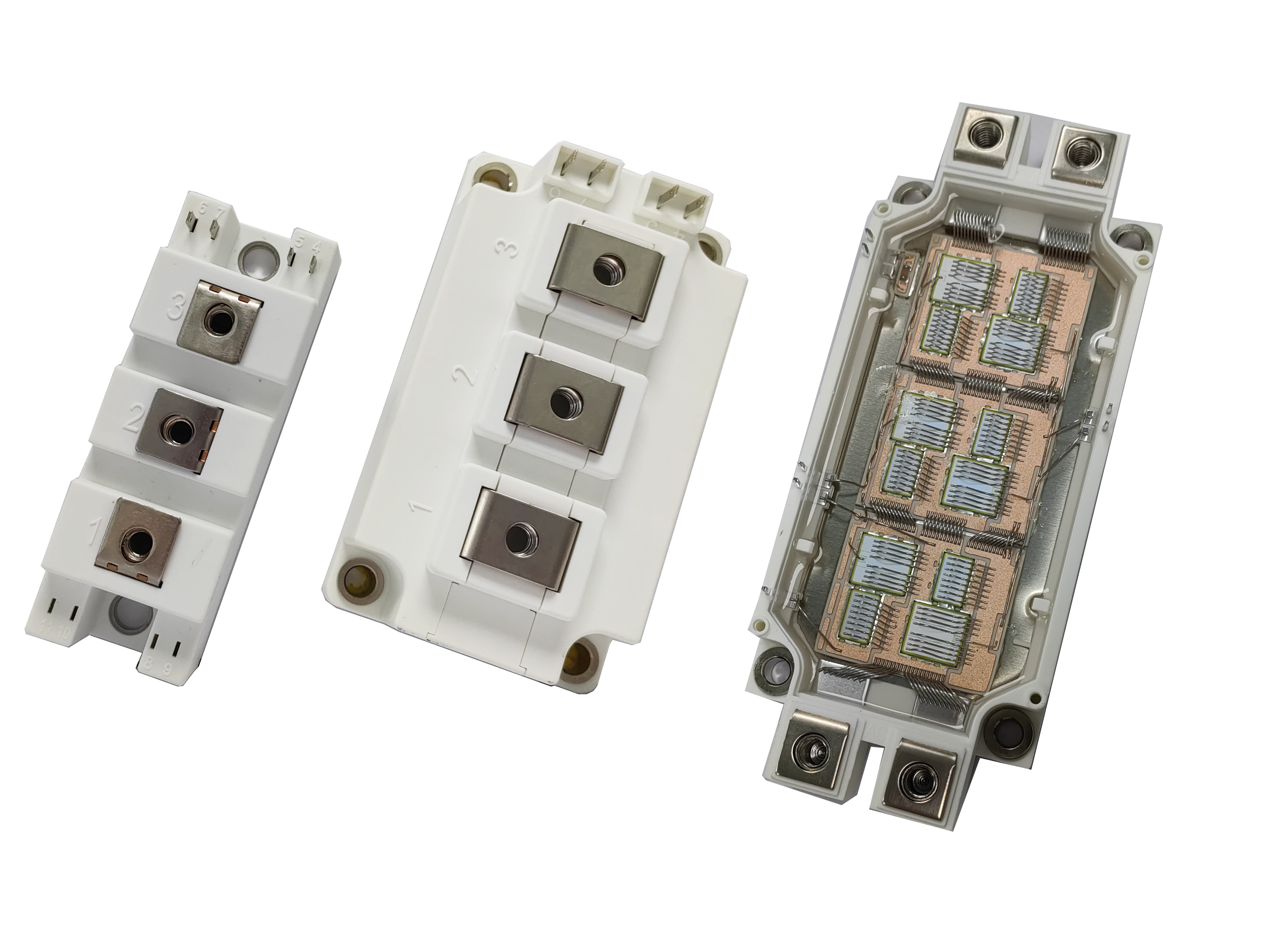
For installations subject to fluctuating loads or frequent start-stop cycles, the A46-version full-module thermal-cycle-resistant 106A thyristor module for ups systems is specifically engineered to handle thermal expansion and contraction. Its full-module encapsulation safeguards internal structures from damage due to repeated heating and cooling.
The A46-version is particularly effective in large-scale industrial UPS systems, where consistent current handling is necessary and environmental factors can stress internal bonds. Its thermal-cycle-resistant nature ensures long-term durability without performance degradation.
3. Thermal Resistance and Its Influence on Ratings
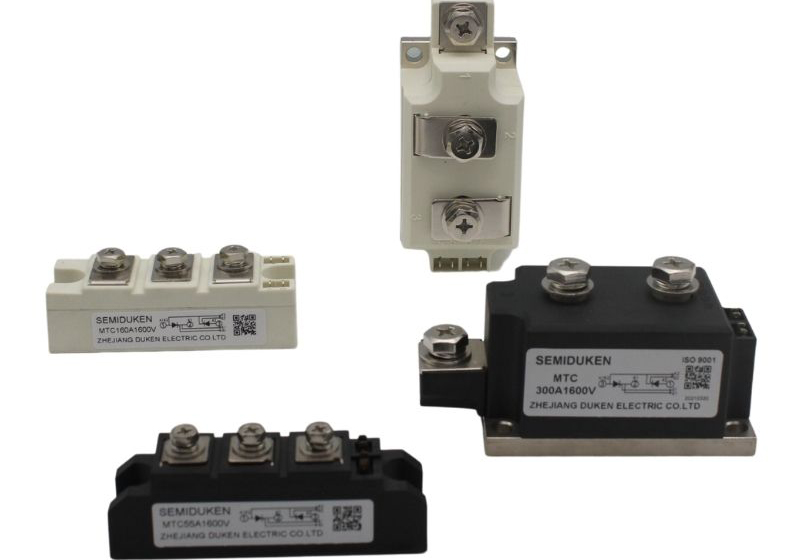
Even the best voltage and current specs are meaningless without efficient heat dissipation. The screw-mount certified low Rth(j-c) 106A thyristor module for ups systems addresses this with an optimized thermal resistance from junction to case, allowing for fast and consistent cooling via external heat sinks.
Low Rth(j-c) is essential for preserving the module’s ability to operate at or near its rated current without derating. This is particularly relevant in UPS designs that operate in compact enclosures or with continuous high loads.
The screw-mount configuration further enhances reliability by ensuring secure mechanical bonding and consistent heat transfer. It also makes maintenance easier, allowing for straightforward module replacement during scheduled servicing.
4. Real-World Matching of Ratings to UPS Demands
When designing or upgrading a UPS system, engineers must align module ratings with both operational needs and environmental conditions. Here’s how each of these modules meets specific application scenarios:
Surge-protection low forward-voltage phase-angle-control 106A thyristor module for ups systems: Ideal for sensitive or high-risk environments such as medical facilities, where voltage control and transient protection are paramount.
A46-version full-module thermal-cycle-resistant 106A thyristor module for ups systems: Suited for installations that undergo frequent temperature variation or heavy industrial loads, where thermal integrity is critical.
Screw-mount certified low Rth(j-c) 106A thyristor module for ups systems: Best for modular UPS systems in data centers or compact power units, where space and cooling efficiency dictate performance.
5. Conclusion: Smart Module Selection for Long-Term Stability
Voltage and current ratings aren’t just specs on a datasheet—they’re the foundation for reliability, safety, and performance. Engineers who understand how these ratings interact with application conditions can select the most suitable 106A thyristor module, optimizing both power flow and thermal behavior.
Whether you're dealing with transient suppression, continuous load stability, or modular thermal design, modules like the surge-protection low forward-voltage phase-angle-control 106A thyristor module for ups systems, A46-version full-module thermal-cycle-resistant 106A thyristor module for ups systems, and screw-mount certified low Rth(j-c) 106A thyristor module for ups systems provide well-rounded solutions for next-gen UPS deployments.