Why Thermal and Electrical Matching Define Thyristor Compatibility
In power electronics, component compatibility is often misunderstood as a simple matter of current and voltage rating. Yet in large industrial applications, a thyristor that looks sufficient on paper can still underperform if its thermal profile, switching behavior, and installation conditions do not align with the system. This is especially true for a 1000A phase control thyristor, which is normally used in demanding environments where operating margins must remain stable over long periods. Thermal and electrical matching are therefore the real foundation of compatibility.
Electrical matching begins with the waveform. A thyristor in a phase-controlled converter does not see a perfectly smooth load profile. Instead, it encounters conduction intervals, non-sinusoidal current shapes, repetitive recovery stress, and sometimes severe current spikes during startup or fault recovery. In applications involving DC link rectification in drives forced-cooling heat sink 1000A phase control thyristor requirements, engineers must review how the converter behaves over the full duty cycle. Average current is only one part of the decision. RMS current, surge tolerance, line disturbances, and harmonic conditions all influence whether the semiconductor is genuinely suitable.
The same logic applies to voltage stress. Real systems rarely operate at textbook conditions. Overvoltage transients can come from switching events, transformer leakage, grid disturbances, or layout-induced oscillation. This is why the specification power distribution systems 6500 V VRRM 1000A phase control thyristor has real design value in demanding installations. A higher repetitive peak off-state voltage gives additional confidence, but engineers still need to confirm that the device is coordinated with snubber networks, surge protection, and insulation design. Compatibility improves when voltage margin is intentional rather than accidental.
Switching immunity is another defining factor. In converters exposed to steep transients, the risk of false triggering rises sharply unless the thyristor is chosen with sufficient dv/dt capability. That is why a high current switching device high dv/dt immunity 1000A phase control thyristor is preferred in systems with fast electrical edges or noisy operating surroundings. High dv/dt immunity helps prevent unwanted conduction and supports stable phase-angle control, particularly where several power stages operate close together. Still, the device alone cannot solve every problem; circuit layout and snubber design remain important parts of the solution.
Thermal matching is just as important as electrical matching. Every ampere conducted through a high-power thyristor produces heat that must travel from the semiconductor junction through the package, into the heat sink, and out to the surrounding environment. If any part of that path is weak, the junction temperature rises and device life can shorten significantly. In many industrial systems, the choice centers on DC link rectification in drives forced-cooling heat sink 1000A phase control thyristor suitability because forced cooling provides a predictable method of holding temperature within a safe range. Engineers should evaluate thermal resistance, airflow consistency, ambient extremes, and heat sink cleanliness as part of the compatibility review.
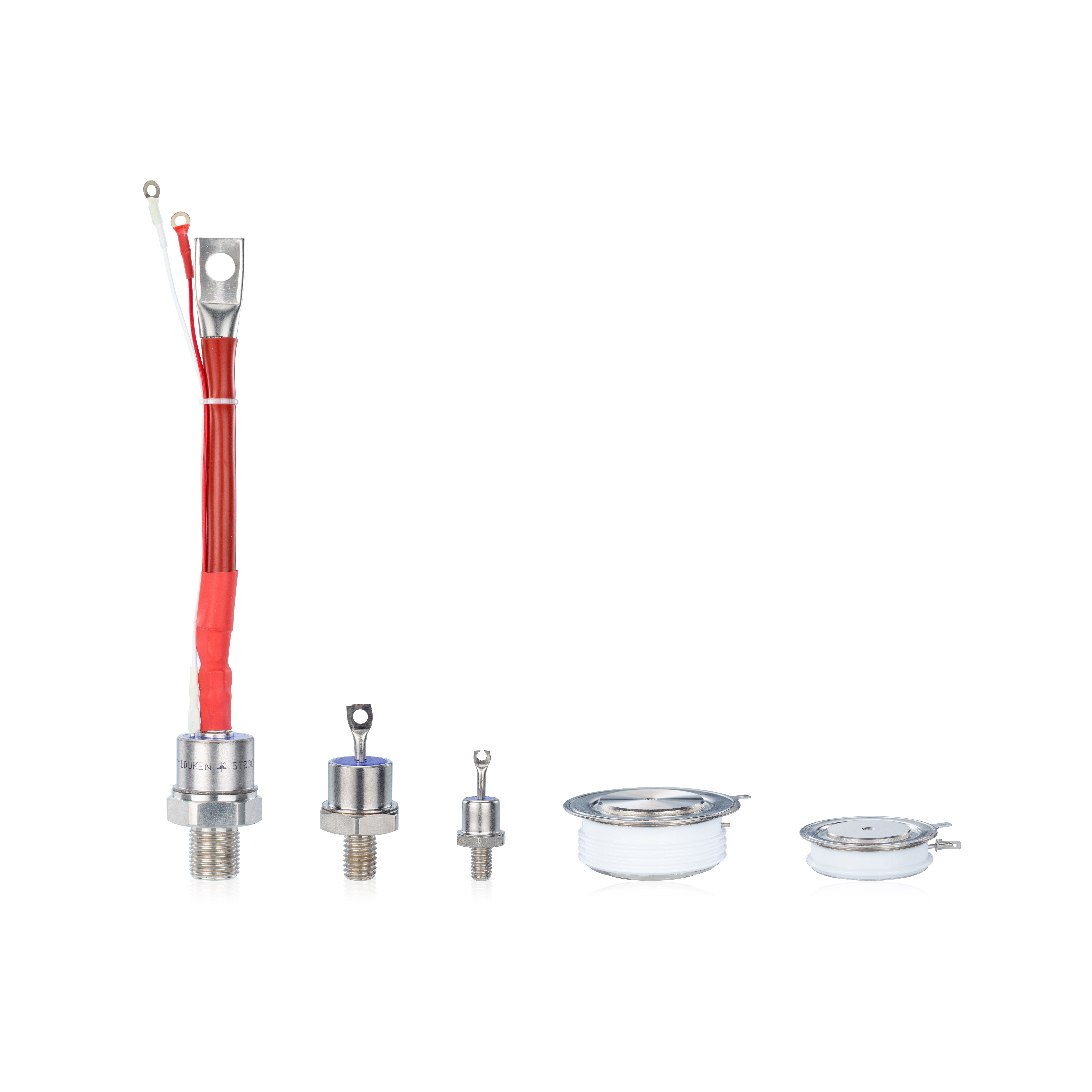
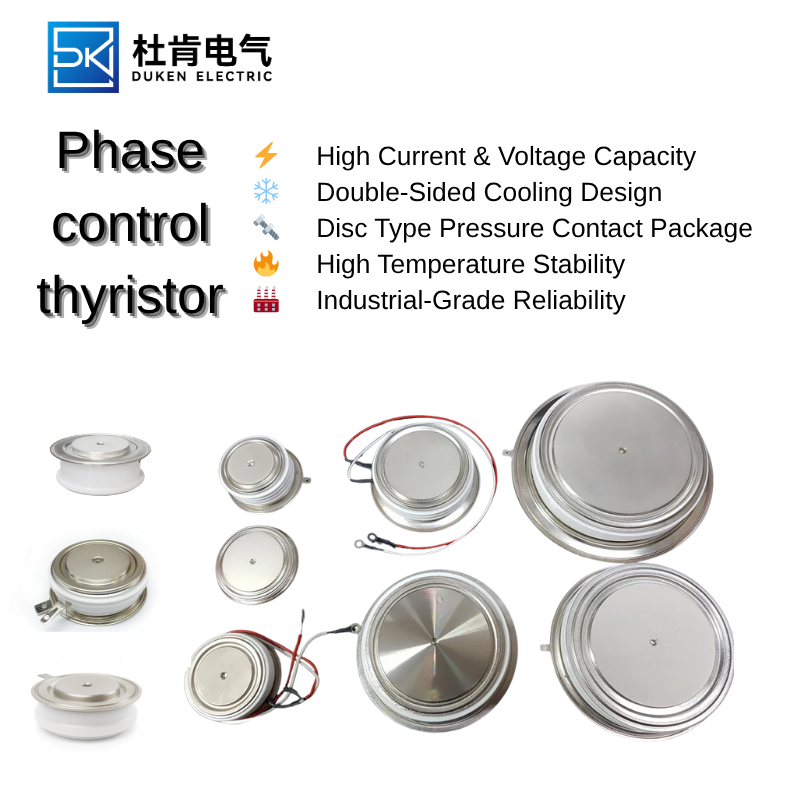
Mechanical assembly has a direct impact on thermal success. Disc-type devices need uniform clamping pressure, accurate surface preparation, and stable mounting alignment. A poorly installed component may show hot spots, uneven contact resistance, or premature degradation even when the electrical design is otherwise sound. This is one reason why specifying a high current switching device high dv/dt immunity 1000A phase control thyristor is only the beginning; the installation method has to preserve the performance promised by the device structure.
Control interface compatibility should also be considered. The gate drive must deliver enough trigger energy at the right time and under the right isolation conditions. If the trigger system is weak or inconsistent, firing angle accuracy suffers and converter losses can increase. In high-voltage cabinets built around power distribution systems 6500 V VRRM 1000A phase control thyristor requirements, the trigger architecture should be reviewed with the same seriousness as the power path. Reliable operation depends on the interaction between the firing board, the semiconductor, and the electrical noise environment.
Long-term reliability testing often reveals the difference between a marginal fit and a strong fit. Repeated thermal cycling, seasonal temperature swings, dust buildup, and fluctuating load patterns can gradually expose weaknesses that are not obvious during commissioning. For this reason, project teams revisit phrases such as DC link rectification in drives forced-cooling heat sink 1000A phase control thyristor, high current switching device high dv/dt immunity 1000A phase control thyristor, and power distribution systems 6500 V VRRM 1000A phase control thyristor when validating the final design. These phrases summarize the three most important compatibility pillars: thermal control, switching robustness, and voltage endurance.
Ultimately, the best thyristor selection is based on a complete system view. Electrical matching ensures the device can handle the waveform and voltage stress. Thermal matching ensures it can survive real operating hours without excessive junction temperature. When both are addressed together, a 1000A phase control thyristor becomes a dependable building block for industrial conversion equipment. Compatibility is therefore not a catalog checkbox, but the result of careful engineering across the entire application.