Electrical Safety Steps for Installing an 800A Phase Control Thyristor
Installing an 800A phase control thyristor in a high-power electrical cabinet requires strict attention to safety, insulation, cooling, and commissioning. Because this type of device is commonly used in demanding AC control systems, a small installation error can cause overheating, unstable output, or serious equipment damage. A safe installation begins before the device is mounted and continues through inspection, wiring, testing, and long-term maintenance.
The first task is to verify the device rating against the system design. Engineers should review the AC power regulators datasheet KP800A-6500V 800A phase control thyristor information to confirm voltage class, current capacity, surge tolerance, gate trigger requirements, and thermal limits. The selected thyristor should provide enough margin for normal operation and expected transient voltage. In industrial sites, voltage spikes may come from transformers, inductive loads, switching contactors, or long cable runs.
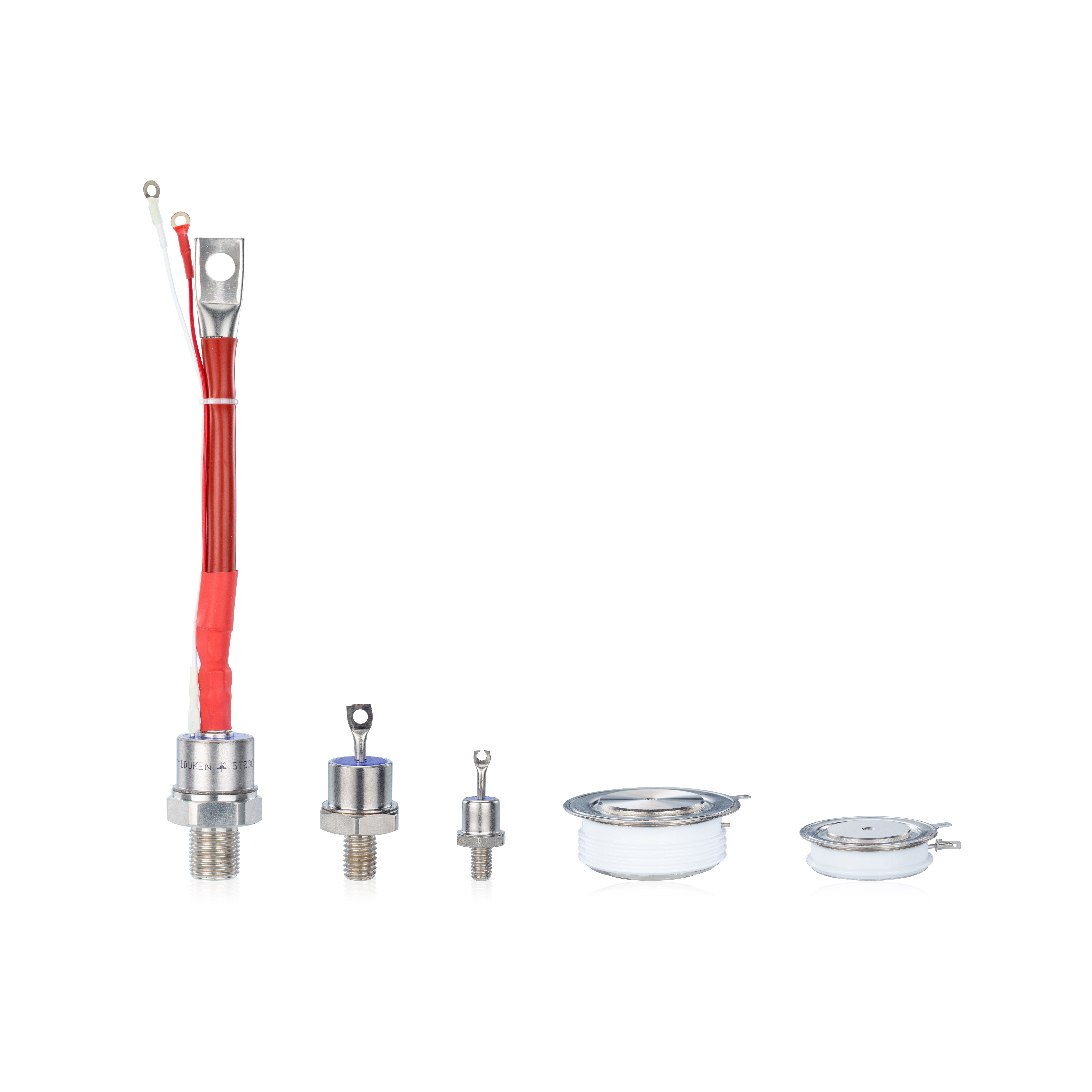
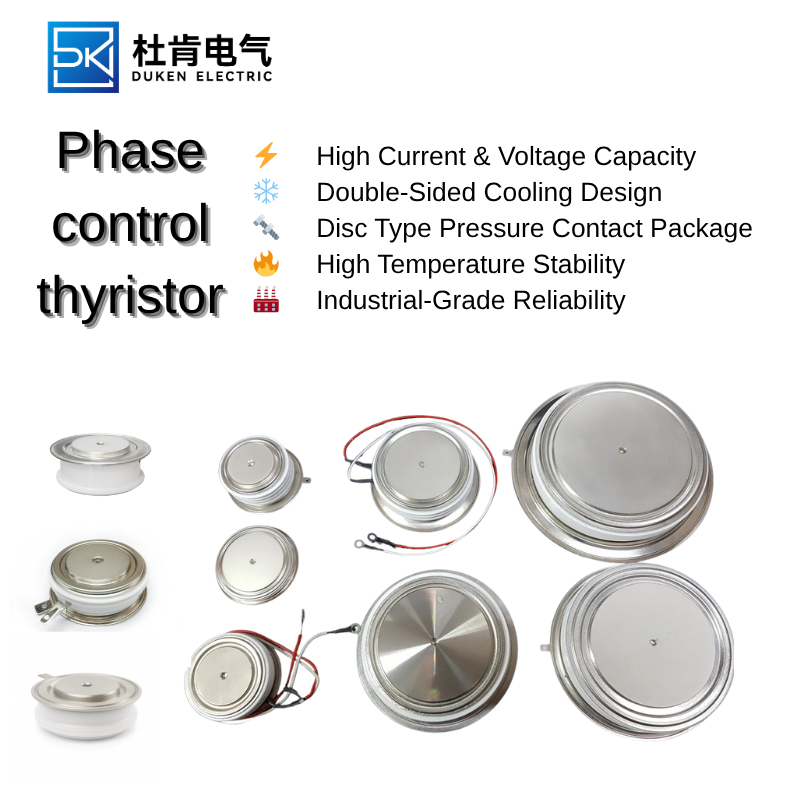
Before mounting, inspect the thyristor package carefully. The ceramic body, metal contact faces, and gate terminals should be clean and undamaged. Heat sink surfaces must be flat and free from burrs, oxidation, or dust. In a mining equipment power control forced-cooling heat sink 800A phase control thyristor cabinet, contamination is a common problem, so the installation area should be cleaned before assembly. Even a small particle between the thyristor and heat sink can reduce thermal contact and create a hot spot.
Correct clamping pressure is essential. Disc thyristors depend on uniform mechanical force to achieve good electrical and thermal contact. Uneven tightening may cause one side of the device to heat faster than the other. Excessive pressure can damage the internal structure, while insufficient pressure increases contact resistance. The installer should use the recommended clamp assembly and apply pressure gradually and evenly.
Electrical spacing must be planned with care, especially for high-voltage service. A large-scale heating elements 6500 V VRRM 800A phase control thyristor installation needs suitable creepage distance, clearance distance, and insulation barriers. Cable lugs and busbars should not be crowded around the device. High-voltage conductors must be arranged to reduce the chance of flashover, and all sharp metal edges should be rounded or insulated.
Cooling should be confirmed before energizing the circuit. High-current thyristors generate heat during conduction, and that heat must be removed continuously. A mining equipment power control forced-cooling heat sink 800A phase control thyristor assembly should include reliable fans, clean air channels, temperature sensors, and airflow monitoring. If the fan direction is wrong or the filter is blocked, the device may overheat quickly under load.
Gate wiring must be separated from power wiring. The gate circuit carries a control signal, not load current, so it is sensitive to electrical noise. Use short, well-routed wires and avoid running gate leads parallel to high-current busbars. The firing unit should be compatible with the values listed in the AC power regulators datasheet KP800A-6500V 800A phase control thyristor reference. Proper gate drive helps the thyristor turn on cleanly and reduces unnecessary heating.
Protection design should include fast fuses, snubber circuits, and surge suppression. In AC regulation systems, voltage rise rate and current surge can stress the thyristor during abnormal events. RC snubbers help manage dv/dt, while semiconductor fuses help limit fault energy. For large-scale heating elements 6500 V VRRM 800A phase control thyristor systems, protection is especially important because heater banks can draw large current for extended periods.
Commissioning should begin with the main power isolated. Check polarity, gate connections, insulation resistance, fan operation, grounding, and interlocks. After these checks, apply power gradually. Observe the output waveform, current balance, and heat sink temperature. A smooth increase in output power indicates that the phase control circuit is operating correctly. Sudden temperature rise, noise, or waveform distortion should be investigated immediately.
After installation, safety depends on routine inspection. In a mining equipment power control forced-cooling heat sink 800A phase control thyristor system, dust and vibration can loosen connections and reduce cooling efficiency. Maintenance teams should clean filters, inspect fans, check busbar tightness, and record operating temperatures. For large-scale heating elements 6500 V VRRM 800A phase control thyristor applications, thermal cycling should also be monitored because repeated heating and cooling can affect mechanical joints.
A safe installation is the result of careful preparation and disciplined execution. The AC power regulators datasheet KP800A-6500V 800A phase control thyristor provides the technical foundation, but the final reliability depends on correct mounting, proper cooling, clean wiring, and effective protection. When these steps are followed, the thyristor can provide stable power regulation in heavy-duty industrial environments.