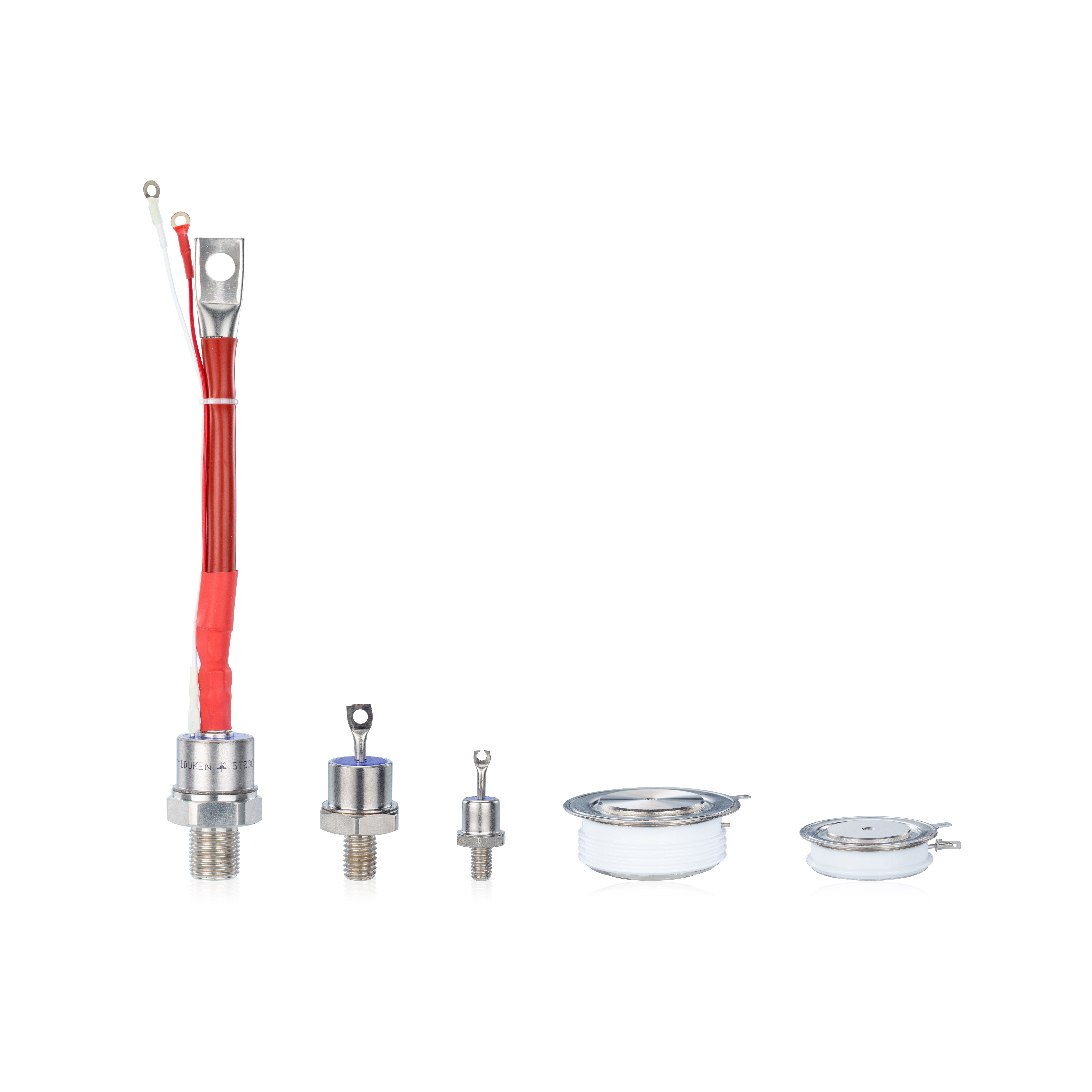
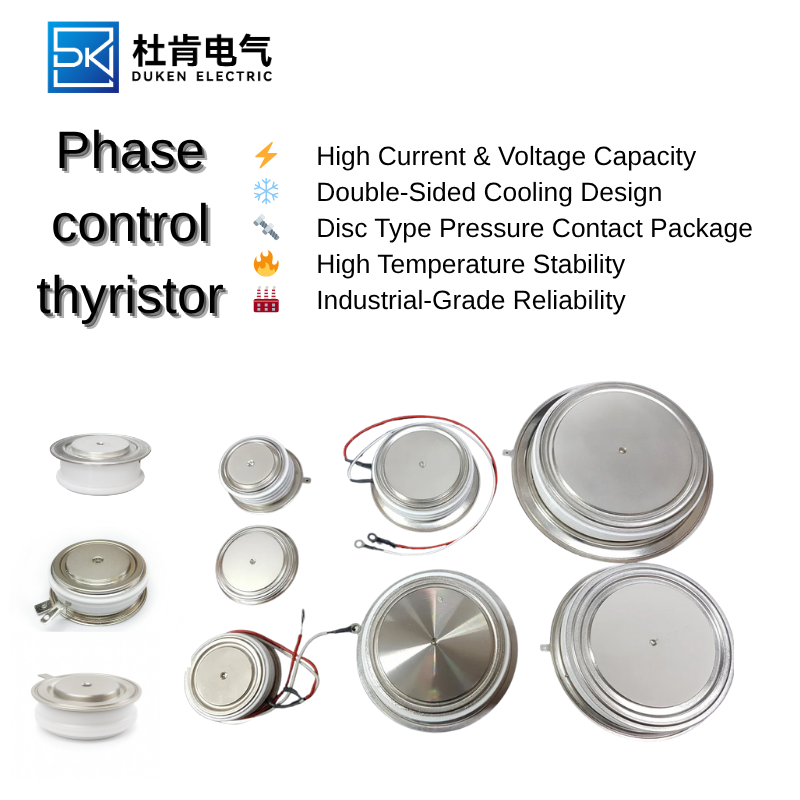
Optimizing Heavy-Duty Inverter Design with a 6500V 1800A Phase Control Thyristor
Heavy-duty inverter systems are designed to manage electrical energy under severe operating conditions. They must convert, regulate, and deliver power with high accuracy while protecting motors, heating loads, transformers, and industrial process equipment. In these demanding environments, the 1800A phase control thyristor plays an essential role because it combines high current capacity, stable blocking performance, and dependable switching control.
For engineers working with large-scale power conversion, choosing the correct thyristor is not only a component-level decision. It affects the entire inverter architecture, including protection design, thermal layout, cabinet structure, gate control strategy, and long-term maintenance planning. A well-matched thyristor can improve system stability, reduce downtime, and support efficient energy delivery in mining, electromagnetic heating, and motor drive applications.
Voltage Endurance for High-Power Systems
Inverter circuits used in industrial environments often face high voltage stress. Sudden load changes, regenerative energy, switching events, and grid disturbances can create voltage peaks that exceed normal operating levels. This makes repetitive peak reverse voltage rating a critical specification.
A mining equipment power control 6500 V VRRM 1800A phase control thyristor is suitable for systems where strong voltage-blocking capability is required. The 6500 V VRRM rating provides valuable design margin for medium-voltage power control equipment. In mining operations, where crushers, hoists, conveyors, and ventilation systems rely on uninterrupted operation, this voltage endurance helps improve system reliability.
The use of a mining equipment power control 6500 V VRRM 1800A phase control thyristor also supports safer inverter design. Mining facilities often experience harsh electrical conditions caused by long cable runs, large inductive loads, and fluctuating power demand. With adequate voltage margin, engineers can design systems that are more resistant to transient stress and unexpected voltage spikes.
Current Capacity and Load Stability
An 1800A rating allows the thyristor to manage large current loads in continuous industrial service. This is especially important when the inverter supplies heavy machinery or process equipment that operates for long periods. High current capacity helps prevent overload-related instability and allows the inverter to maintain controlled output under variable load conditions.
In mining environments, power electronics must tolerate both electrical and mechanical stress. Dust, vibration, moisture, and temperature changes can all affect system reliability. A mining equipment power control 6500 V VRRM 1800A phase control thyristor provides the rugged current-handling foundation needed for stable power control in these demanding conditions.
High dv/dt Immunity in Inverter Operation
One of the challenges in inverter design is managing rapid voltage changes. When voltage rises quickly across a thyristor, there is a risk of unintended triggering if the device has insufficient dv/dt capability. False triggering can damage equipment, disturb the process, or cause abnormal inverter behavior.
For this reason, electromagnetic heating systems high dv/dt immunity 1800A phase control thyristor solutions are valuable in applications where rapid voltage transitions are common. Electromagnetic heating systems often operate with dynamic load characteristics, and the power circuit may experience frequent transient activity. High dv/dt immunity helps keep the device stable until a proper gate signal is applied.
A dependable electromagnetic heating systems high dv/dt immunity 1800A phase control thyristor improves the reliability of heating equipment by reducing the risk of uncontrolled conduction. This is important in induction heating, metal treatment, forging, and melting processes where temperature precision and stable power delivery directly affect product quality.
Supporting Consistent Heating Performance
Electromagnetic heating requires accurate power regulation. If the inverter output fluctuates, heating uniformity can suffer. This may lead to uneven material temperature, reduced process efficiency, and inconsistent final product quality.
By using an electromagnetic heating systems high dv/dt immunity 1800A phase control thyristor, designers can create a more stable power conversion platform. The thyristor’s ability to withstand rapid voltage rise helps protect the circuit during switching transitions. Combined with proper snubber circuits and gate control, this contributes to smooth heating performance and better process repeatability.
Low On-State Voltage Drop and Efficiency
Efficiency is a major concern in high-power inverter systems. During conduction, a thyristor produces power loss based on its on-state voltage drop and current flow. In an 1800A application, even a small voltage drop can result in significant heat generation. Therefore, a low on-state voltage drop is essential for reducing losses and improving thermal performance.
A soft-start motor drive low on-state voltage drop 1800A phase control thyristor is especially useful where motors require controlled acceleration. During start-up, large motors can draw high current, creating both electrical and mechanical stress. A thyristor with low conduction loss helps manage this current while reducing heat build-up inside the power cabinet.
When engineers apply a soft-start motor drive low on-state voltage drop 1800A phase control thyristor, they can improve the efficiency of the starting process. Lower conduction losses reduce the burden on cooling systems and support longer component life. This is valuable in industrial plants where motors start frequently or operate in high-temperature environments.
Motor Protection and Smooth Starting
Large motors are often connected to pumps, fans, compressors, mills, and conveyor systems. Starting these motors directly across the line can cause high inrush current and mechanical shock. Soft-start control reduces these problems by gradually increasing voltage and allowing the motor to accelerate smoothly.
A soft-start motor drive low on-state voltage drop 1800A phase control thyristor supports this process by enabling controlled power delivery with reduced thermal stress. The result is smoother motor acceleration, lower mechanical wear, and improved protection for connected equipment. Over time, this can reduce maintenance costs and extend the service life of both the motor and the driven machine.
Thermal Design and Installation Quality
Even the best thyristor can fail prematurely if thermal design is poor. Proper heat dissipation is necessary because high current operation produces heat during conduction. Engineers must consider heat sink capacity, cooling airflow, mounting pressure, surface flatness, and thermal interface materials.
In inverter cabinets, temperature monitoring is also important. Sensors can detect abnormal heating before it becomes a failure. Proper installation ensures that the thyristor maintains good thermal contact and operates within its rated limits.
Conclusion
A 6500V 1800A phase control thyristor is a powerful solution for industrial inverter systems that require high current capacity, strong voltage blocking, reliable switching, and efficient conduction. Its value becomes especially clear in mining equipment, electromagnetic heating systems, and soft-start motor drives, where operating conditions are demanding and downtime is costly.
By choosing the right thyristor and designing the surrounding system carefully, engineers can improve inverter reliability, reduce thermal stress, enhance process stability, and protect expensive industrial equipment. Voltage rating, dv/dt immunity, on-state voltage drop, cooling performance, and installation quality should all be evaluated together to achieve long-lasting and efficient power control.