Key Selection Factors for 300A Phase Control Thyristors in Critical Industrial Loads
Modern industrial applications demand robust and reliable power switching components to ensure efficient operation and safety. A 300A phase control thyristor is a vital component in systems such as mining equipment power control, electromagnetic heating systems, and soft‑start motor drive solutions. This article outlines the critical parameters to consider when selecting a thyristor for these high-performance environments.
Voltage Endurance and System Compatibility
In mining equipment power control, thyristors are frequently exposed to high voltages and aggressive surge conditions. One of the first specifications to assess is the 6500 V VRRM rating. This peak repetitive reverse voltage capacity ensures that the thyristor can survive electrical transients without sustaining damage. The rugged nature of mining environments—ranging from underground systems to high-altitude stations—requires devices with high electrical and mechanical endurance.
By selecting a 300A phase control thyristor with 6500 V VRRM, engineers can future-proof power control systems, minimizing the risks of failure due to back-EMF, inductive loads, or high-voltage line transients.
Immunity to Rapid Voltage Changes
In fast-switching environments such as electromagnetic heating systems, system stability is dependent on the thyristor’s resistance to voltage fluctuation-induced misfires. A device with high dv/dt immunity resists unintentional triggering caused by sharp voltage changes, ensuring that switching only occurs when precisely commanded.
This feature becomes crucial in systems like induction heating or dielectric heating where pulse accuracy and timing directly affect output quality. High dv/dt immunity ensures the system maintains thermal consistency, reducing energy waste and product defects.
Energy Efficiency in Motor Startup
In soft‑start motor drive applications, the priority shifts to efficiency and thermal control. The low on‑state voltage drop characteristic in a thyristor minimizes the power dissipated during conduction. This translates to:
Less energy wasted as heat
Lower cooling system demand
Longer thyristor and motor life
This parameter is especially important for applications like compressors, escalators, and pumps where start-stop cycles are frequent. A 300A phase control thyristor with a low conduction voltage is ideal for maintaining startup performance while preserving overall energy efficiency.
Structural Features That Influence Performance
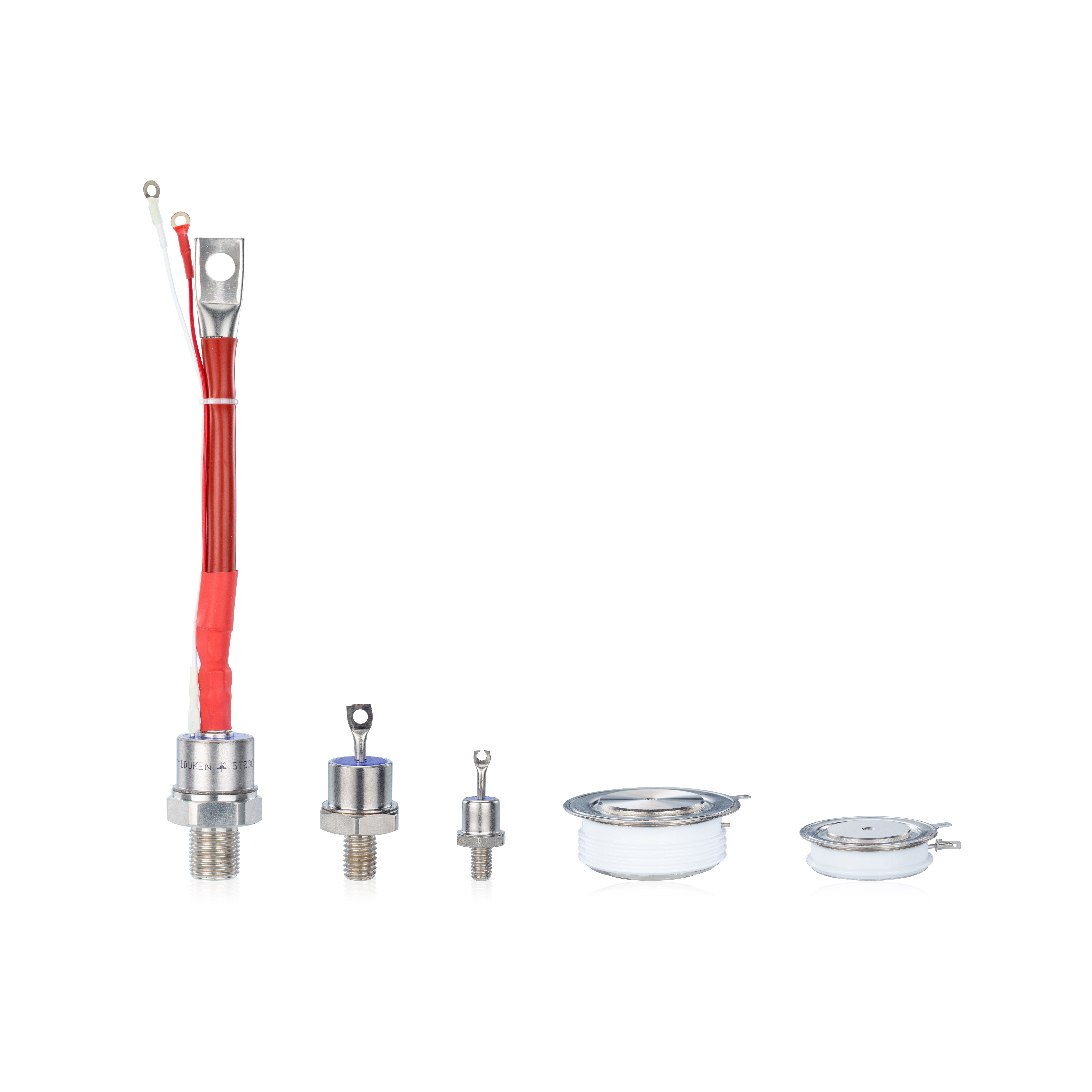
The disc package format is common in high-current thyristors due to its mechanical reliability and thermal performance. This structure provides uniform pressure distribution across the junction area and supports efficient heat transfer to cooling systems.
For mining equipment power control, a disc package ensures vibration resistance and secure mounting in shock-prone locations. In electromagnetic heating systems, the compact disc design supports dense circuit integration, reducing EMI and enhancing switching speed. In soft‑start motor drive setups, this package simplifies alignment with standard heat sinks, enabling fast assembly and replacement.
Final Checklist for Selection
Engineers selecting a 300A phase control thyristor should verify:
✅ 6500 V VRRM capability for high-voltage resilience
✅ High dv/dt immunity for reliable switching in fast-response circuits
✅ Low on‑state voltage drop for efficient power control
✅ Disc package design for thermal and mechanical robustness
✅ Compatibility with forced-cooling systems where needed
Each application places different demands on the thyristor. However, by focusing on these five core parameters, engineers can ensure both high performance and long-term operational stability.