A Practical Engineering Checklist for Choosing a 1400A Phase Control Thyristor
Choosing a 1400A phase control thyristor becomes easier when the decision is organized into a practical engineering checklist. High-power semiconductors must be selected with attention to electrical stress, thermal behavior, mechanical installation, control compatibility, protection coordination, and long-term service conditions. A simple catalog comparison is not enough for equipment that operates at high current and high voltage.
This checklist is useful for engineers, maintenance teams, OEM designers, and purchasing specialists who need to evaluate a replacement or select a device for a new project. A part described as datasheet KP1400A‑6500V low leakage current 1400A phase control thyristor should be examined in relation to the actual system, including grid voltage, load waveform, cooling system, driver design, and fault protection.
1. Confirm the electrical environment
Start by defining the system voltage, line tolerance, transformer secondary voltage, maximum transient voltage, and insulation requirements. The selected thyristor must block voltage safely in both normal and abnormal conditions. In many systems, additional derating is required to provide a safety margin against spikes and grid disturbance.
Next, define the load current. Record average current, RMS current, peak repetitive current, overload current, and expected duty cycle. In phase control applications, current waveform depends on firing angle and load type. A motor load, heating load, rectifier load, and inductive industrial load can all create different stress profiles.
When checking a datasheet KP1400A‑6500V low leakage current 1400A phase control thyristor, compare every rating with calculated or measured system values. Do not assume that the rated 1400A can be used under all cooling and waveform conditions. The datasheet test conditions must match, or be adjusted to, the real installation.
2. Verify voltage rating and leakage behavior
A high blocking voltage rating is necessary for high-power equipment, but leakage behavior is also important. Off-state leakage current contributes to heat and can influence voltage sharing in series-connected assemblies. Low leakage current is particularly valuable in high-voltage stacks where stable blocking is required.
The datasheet KP1400A‑6500V low leakage current 1400A phase control thyristor should be reviewed for leakage at rated voltage and elevated junction temperature. If the application environment is hot, leakage at high temperature is more meaningful than room-temperature data. Engineers should also consider static voltage-sharing resistors and dynamic snubber components if devices are used in series.
A good selection process checks not only maximum leakage, but also consistency. In large assemblies, predictable device behavior helps simplify balancing and improves long-term reliability.
3. Calculate thermal performance before final selection
Thermal calculation is one of the most important steps. The power loss of a thyristor is mainly caused by on-state voltage drop during conduction. At high current, even a modest voltage drop creates substantial heat. If this heat is not removed effectively, junction temperature will rise beyond safe limits.
Calculate conduction loss based on expected current and waveform. Then use thermal resistance values to estimate junction temperature under worst-case ambient or coolant temperature. Include heatsink resistance, thermal interface quality, airflow or water flow, and cabinet temperature. Design margin should be included for aging, dust accumulation, fan degradation, or coolant contamination.
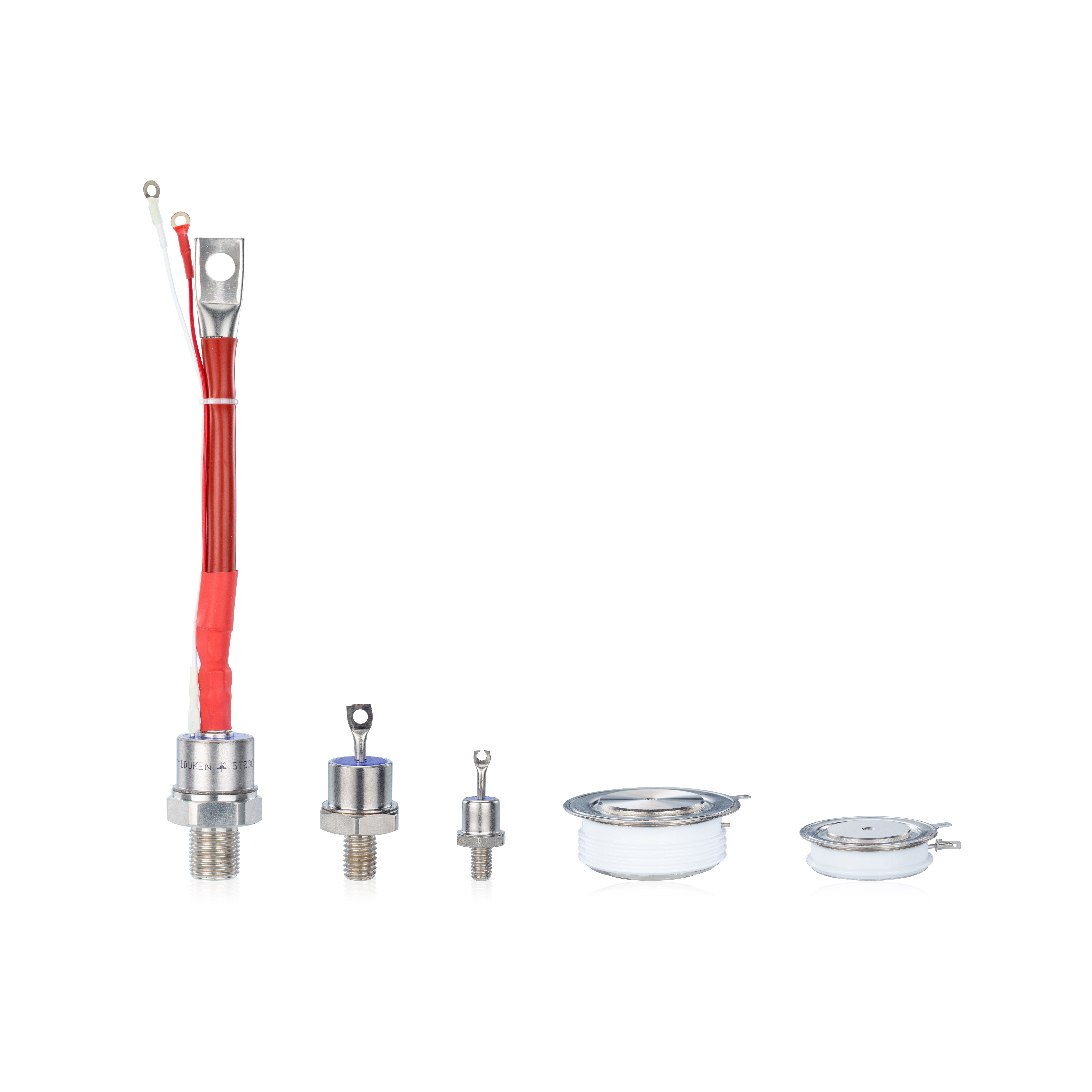
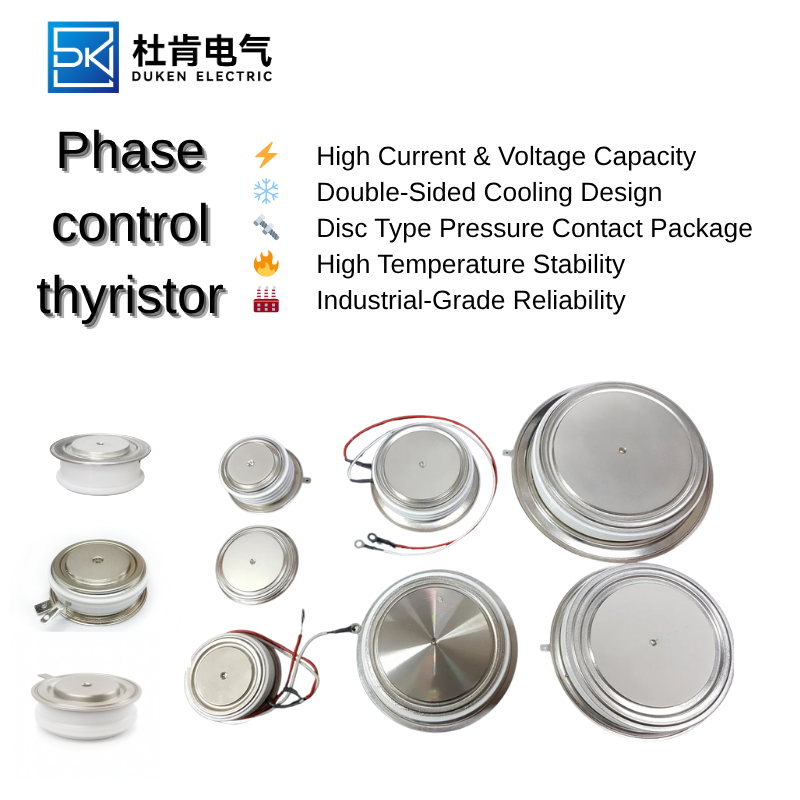
Disc package devices require correct pressure mounting. If pressure is too low, thermal and electrical contact resistance increase. If pressure is too high, mechanical damage can occur. Proper installation tools and procedures should be included in the engineering checklist.
4. Review surge current and protection coordination
Fault events are unavoidable in many industrial power systems. Short circuits, transformer inrush, load arcs, and misoperation can impose severe surge current on the thyristor. The selected device must survive long enough for protective equipment to clear the fault.
A high surge current rating Aluminium housing disc package 1400A phase control thyristor is beneficial when equipment faces demanding transient conditions. However, the surge rating should be compared with the actual energy let-through of fuses or breakers. Surge current, I²t, pulse duration, starting temperature, and repetition rate should be considered together.
A high surge current rating Aluminium housing disc package 1400A phase control thyristor should be protected by suitable semiconductor fuses and fast fault detection. The control system should inhibit further gate pulses after a fault. Surge capability improves ruggedness, but it should not be used as a substitute for correct protection design.
5. Check gate drive and control requirements
Reliable firing is essential in phase control systems. The gate driver must deliver enough current and voltage to trigger the thyristor at the required firing angle. Gate pulse width, isolation, noise immunity, and timing accuracy all influence system stability.
If gate drive energy is insufficient, the thyristor may turn on unevenly, causing localized heating or unstable conduction. If the driver is too sensitive to noise, false triggering may occur. Review gate trigger current, gate trigger voltage, holding current, latching current, dv/dt capability, and di/dt limits.
The control board should be tested under low temperature, high temperature, low supply voltage, and electrical noise. A reliable 1400A phase control thyristor installation requires coordination between the semiconductor and the firing circuit.
6. Confirm package compatibility and service conditions
Physical compatibility should be verified before ordering. Check disc diameter, device thickness, contact surface dimensions, polarity, mounting force, cooling method, and terminal arrangement. A device may have suitable electrical ratings but still be unsuitable if it does not fit the existing stack.
The high surge current rating Aluminium housing disc package 1400A phase control thyristor is often selected for heavy-duty environments because disc construction and Aluminium housing support robust integration. Still, installation must follow correct procedures. Maintenance access, replacement time, spare part storage, and technician training should be considered.
Finally, review supplier documentation, traceability, inspection standards, and technical support. For critical equipment, sample validation under realistic conditions is recommended. A well-chosen datasheet KP1400A‑6500V low leakage current 1400A phase control thyristor can deliver stable blocking, reliable conduction, controlled leakage, strong surge tolerance, and long service life when matched properly to the system.
By following this checklist, teams can reduce selection risk and avoid common mistakes. The best thyristor choice is the one that satisfies the complete operating profile, not just the headline voltage and current ratings.