How to Evaluate Compatibility of a 1000A Phase Control Thyristor in Industrial Drive Systems
When engineers discuss thyristor compatibility, they are not only asking whether a device can switch on and off under rated conditions. They are asking whether the component fits the real electrical, thermal, mechanical, and control environment of the equipment. In large industrial drive systems, that question becomes especially important because a mismatch can reduce efficiency, shorten service life, or create unstable operating behavior. A 1000A phase control thyristor is usually selected for demanding applications where current stress, voltage margin, and heat management all matter at the same time.
The first area to review is the electrical operating profile of the drive. Many heavy-duty systems rely on controlled rectification to convert AC input into usable DC power for motor control stages. In this context, engineers often compare the converter architecture, transformer arrangement, and firing strategy before deciding whether a specific thyristor will perform reliably. A device intended for DC link rectification in drives forced-cooling heat sink 1000A phase control thyristor applications must support not only the average current but also repetitive surge behavior, line disturbances, and phase imbalance. That means compatibility is tied to the whole circuit, not just the nameplate value.
A second point is switching robustness. Industrial drives are often installed in electrically noisy environments where fast voltage transients are common. Long cable runs, commutation overlap, and imperfect snubber design can all raise stress across the semiconductor. For that reason, the ideal device is often described as a high current switching device high dv/dt immunity 1000A phase control thyristor, because immunity to steep voltage rise helps prevent false triggering and improves stability. This characteristic becomes even more important in facilities with frequent load changes, regenerative effects, or switching interaction between parallel power assemblies.
Voltage capability must also be matched carefully to the system architecture. Engineers usually keep a reasonable safety margin between the working voltage and the repetitive peak off-state voltage of the thyristor. In substations, industrial converters, and large rectifier cabinets, the phrase power distribution systems 6500 V VRRM 1000A phase control thyristor reflects a device class designed for high-voltage endurance and long-term reliability. Compatibility in this area depends on whether the insulation coordination, surge suppression, and transient environment align with the semiconductor’s limits. A strong VRRM rating is valuable, but it still needs to be supported by proper circuit design.
Thermal design is the next major factor. Even a properly rated thyristor can fail early if the cooling path is insufficient. Compatibility should therefore include the thermal resistance of the device package, the clamping force of the assembly, the flatness of the mounting surface, and the performance of the cooling system under worst-case ambient conditions. In practice, many teams specify a DC link rectification in drives forced-cooling heat sink 1000A phase control thyristor because forced-air or liquid-assisted heat removal provides the stability needed for continuous high-current operation. Engineers should calculate junction temperature under peak and average loading rather than assuming the catalog current rating is enough by itself.
Gate drive matching is another area that is often underestimated. A high-power thyristor needs a firing circuit that can deliver the required trigger current with good noise immunity and consistent timing across all operating conditions. Uneven gate performance can increase losses, create commutation problems, or produce nonuniform current sharing in multi-device assemblies. A high current switching device high dv/dt immunity 1000A phase control thyristor still requires a well-designed trigger system, because dv/dt capability does not replace disciplined gate control. Pulse width, isolation design, and synchronization all affect whether the device truly matches the intended converter.
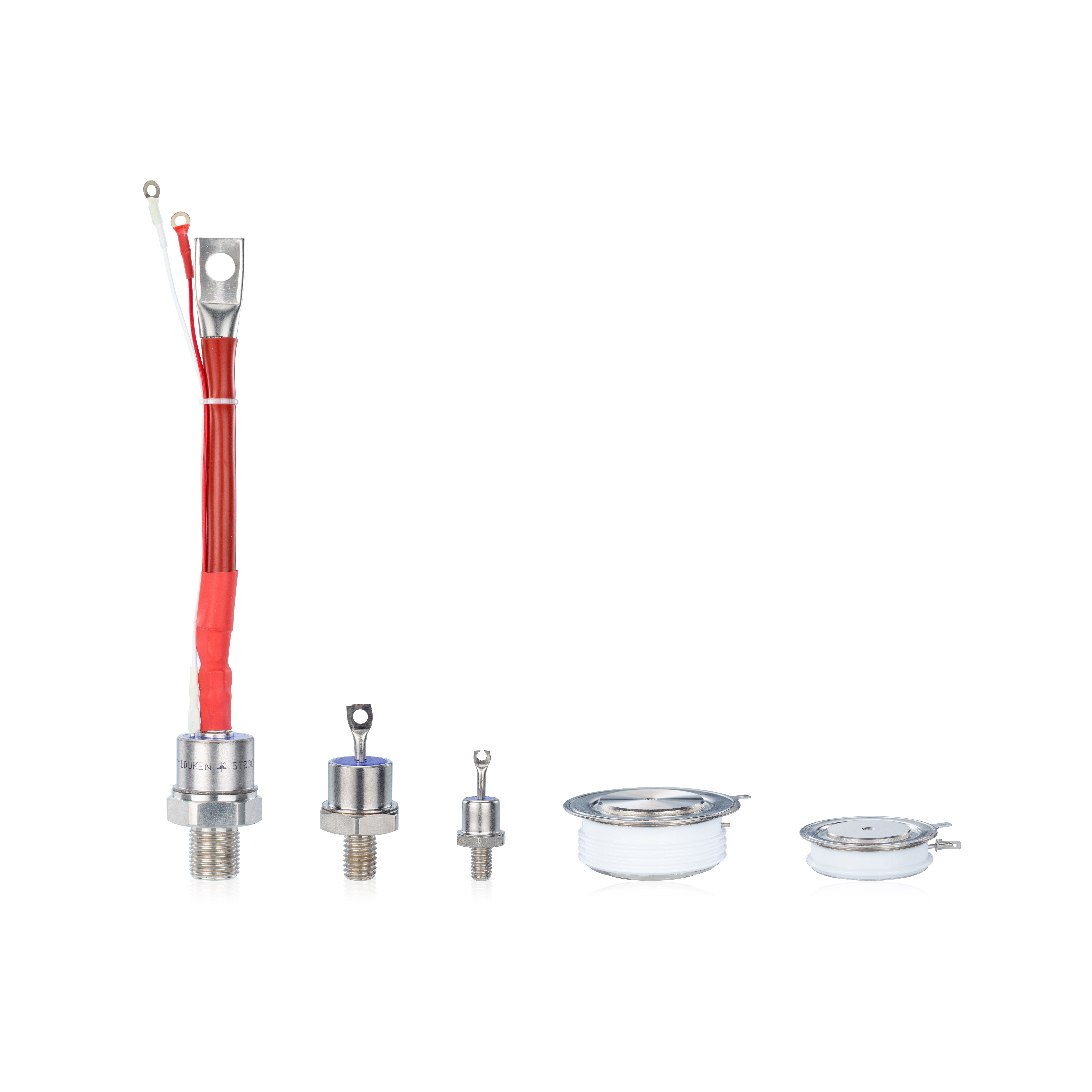
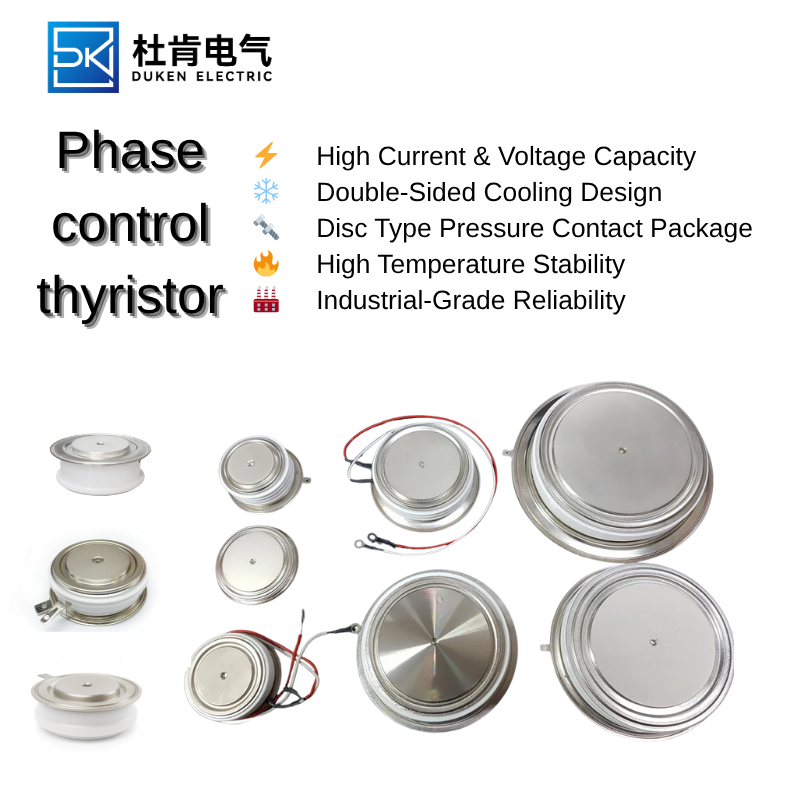
Mechanical integration also matters. Clamp-mounted and disc-type devices need precise installation pressure, clean contact surfaces, and a housing layout that prevents vibration-related issues. Large converters may run for years in mining sites, rolling mills, marine equipment, or utility infrastructure, so long-term stability is part of compatibility too. When an engineer specifies a power distribution systems 6500 V VRRM 1000A phase control thyristor, they are often looking for a component that can survive both electrical stress and industrial operating realities such as dust, heat, and maintenance intervals.
Another key compatibility question is service behavior under abnormal conditions. Short overloads, inrush events, line faults, and cooling fan degradation are all realistic scenarios. The right component should provide enough margin to handle temporary disturbances without drifting toward destructive thermal runaway. That is why many buyers revisit the phrase DC link rectification in drives forced-cooling heat sink 1000A phase control thyristor during final selection, since the cooling method and load profile are inseparable. Similarly, the expression high current switching device high dv/dt immunity 1000A phase control thyristor highlights the need for robust switching performance when the power environment is less than ideal. In high-voltage installations, power distribution systems 6500 V VRRM 1000A phase control thyristor suitability should always be confirmed alongside surge coordination and protection design.
In the end, compatibility is a system-level judgment. Engineers should evaluate current waveform, voltage margin, thermal path, gate drive, mounting structure, and fault tolerance together. A 1000A phase control thyristor is a powerful and reliable component when it is selected with the whole application in mind. The best choice is not simply the highest-rated device, but the one whose electrical and thermal behavior fits the converter, the environment, and the maintenance expectations of the installation.