Selecting an 1800A Phase Control Thyristor for Efficient Industrial Inverter Control
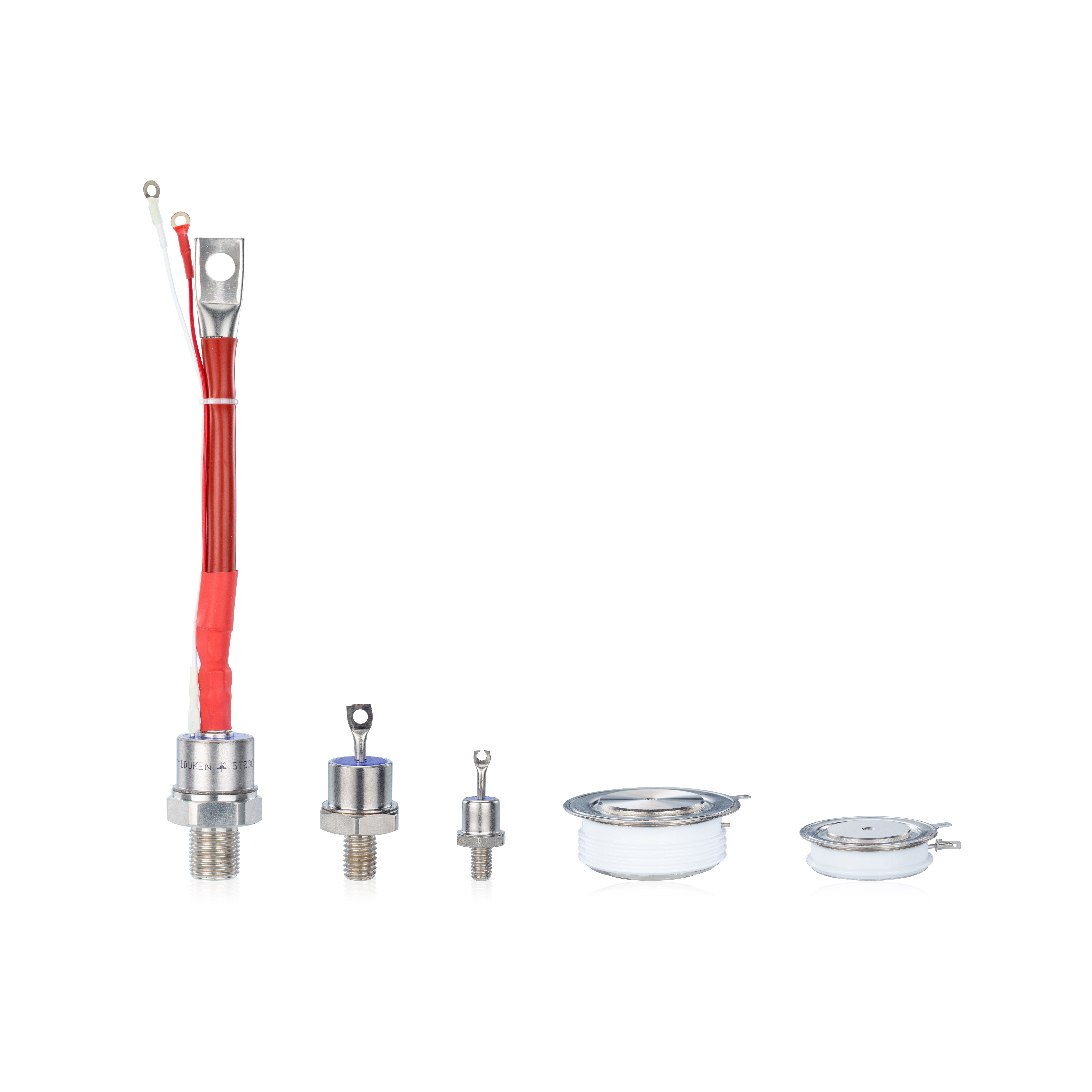
Industrial inverter systems are built to regulate large amounts of electrical energy with accuracy, safety, and long-term stability. In many high-power applications, the thyristor remains one of the most important semiconductor devices because it can handle high current, block high voltage, and provide reliable phase control under demanding conditions. An 1800A phase control thyristor is especially valuable in systems where electrical stress, thermal load, and continuous operation must be carefully managed.
When engineers design inverter equipment for mining machinery, electromagnetic heating, or motor soft-start systems, they must evaluate more than one electrical parameter. Current rating, voltage class, dv/dt immunity, on-state voltage drop, thermal resistance, mounting method, and protection design all influence the final system performance. A suitable thyristor helps the inverter deliver controlled power while reducing the risk of overheating, false triggering, and premature failure.
Matching Thyristor Ratings to Inverter Requirements
Every inverter application has its own operating profile. Some systems require long periods of continuous current flow, while others face frequent start-stop cycles or rapid load changes. The thyristor must be selected according to the real electrical environment rather than only the nominal current value.
A mining equipment power control 6500 V VRRM 1800A phase control thyristor is designed for applications where both voltage endurance and current capacity are essential. In mining environments, equipment may operate far from stable utility infrastructure and may experience voltage disturbances, load shocks, and harsh ambient conditions. The 6500 V VRRM rating provides important protection margin against repetitive voltage stress.
For inverter systems connected to crushers, conveyors, hoists, mills, and pumps, a mining equipment power control 6500 V VRRM 1800A phase control thyristor helps maintain stable power delivery under heavy mechanical load. These machines often demand high torque and may create sudden current changes during operation. A robust thyristor allows the power control system to respond effectively while maintaining safe operation.
Reliability in Harsh Industrial Environments
Mining sites are among the most challenging environments for power electronics. Dust can affect insulation, vibration can loosen mechanical assemblies, and temperature changes can increase stress on components. In these conditions, reliability depends on both device quality and system design.
A mining equipment power control 6500 V VRRM 1800A phase control thyristor supports rugged inverter operation by offering strong blocking capability and high current handling. However, engineers must also ensure proper cabinet sealing, cooling, surge protection, and maintenance access. When these factors are combined, the inverter can operate more reliably and reduce costly production interruptions.
High dv/dt Immunity for Heating Applications
Electromagnetic heating systems use controlled electrical energy to generate heat in conductive materials. These systems are common in metal melting, forging, brazing, surface hardening, and industrial heat treatment. Because heating loads can change rapidly, the inverter must maintain stable switching performance even when voltage transitions are steep.
An electromagnetic heating systems high dv/dt immunity 1800A phase control thyristor is important because it helps prevent unintended turn-on caused by fast voltage rise. False triggering can disturb the heating process and may expose other components to abnormal stress. High dv/dt immunity improves control accuracy and helps the inverter respond only to intended gate signals.
In practical heating equipment, an electromagnetic heating systems high dv/dt immunity 1800A phase control thyristor helps support consistent temperature output. Stable power regulation can reduce defects, improve heating uniformity, and protect valuable production materials. For manufacturers, this can mean better product repeatability and fewer rejected parts.
Circuit Design for Stable Switching
Even when a thyristor has strong dv/dt capability, circuit design remains critical. Snubber networks, busbar layout, grounding, and gate wiring all influence switching behavior. Poor layout can create unwanted voltage spikes or noise coupling, reducing the benefit of a high-performance device.
An electromagnetic heating systems high dv/dt immunity 1800A phase control thyristor should be installed with careful attention to insulation distance, cooling path, and electrical symmetry. In high-power cabinets, balanced current distribution and short connection paths help reduce parasitic inductance. This improves stability and supports long service life.
Efficiency Benefits in Soft-Start Motor Drives
Large motors can create severe electrical and mechanical stress when started directly. Inrush current may cause voltage dips, while sudden torque can damage couplings, belts, shafts, and gearboxes. Soft-start systems reduce these problems by gradually increasing the voltage applied to the motor.
A soft-start motor drive low on-state voltage drop 1800A phase control thyristor improves this process by reducing conduction losses during high-current operation. Since the thyristor carries large current during acceleration, a low voltage drop helps control heat generation. This can improve energy efficiency and reduce the thermal load inside the drive cabinet.
For pumps, fans, compressors, conveyors, and heavy processing machinery, a soft-start motor drive low on-state voltage drop 1800A phase control thyristor allows smoother start-up and better equipment protection. By limiting mechanical shock, the system can extend the service life of driven equipment and reduce maintenance requirements.
Thermal Control and Long-Term Performance
Heat is one of the main causes of failure in power semiconductor systems. As current flows through the thyristor, conduction losses create heat that must be removed efficiently. If the cooling path is inadequate, junction temperature may rise beyond safe limits.
A soft-start motor drive low on-state voltage drop 1800A phase control thyristor helps reduce this risk by lowering the amount of heat produced during conduction. Nevertheless, engineers must still use appropriate heat sinks, fans, liquid cooling, or cold plates depending on the system rating. Thermal sensors and overload protection can provide additional safety.
Maintenance and System Lifecycle Value
The value of a thyristor should be judged not only by purchase cost but also by lifecycle performance. A reliable device can reduce downtime, prevent equipment damage, and lower maintenance expenses. In industrial plants, unscheduled shutdowns often cost far more than the component itself.
For this reason, engineers should select thyristors with sufficient electrical margin and integrate them into a well-protected inverter design. Correct mounting pressure, clean contact surfaces, suitable thermal interface materials, and routine inspection can all help maintain performance over time.
Conclusion
Selecting the right 1800A phase control thyristor is essential for building efficient and reliable industrial inverter systems. In mining equipment, the combination of high current capability and 6500 V VRRM blocking strength supports rugged power control. In electromagnetic heating systems, high dv/dt immunity helps maintain stable switching and process accuracy. In soft-start motor drives, low on-state voltage drop improves efficiency and reduces thermal stress.
By considering electrical ratings, thermal management, protection circuits, installation quality, and application-specific requirements, engineers can design inverter systems that deliver stable performance in demanding industrial environments. A well-selected thyristor is not only a power component; it is a foundation for safer operation, longer service life, and better industrial productivity.