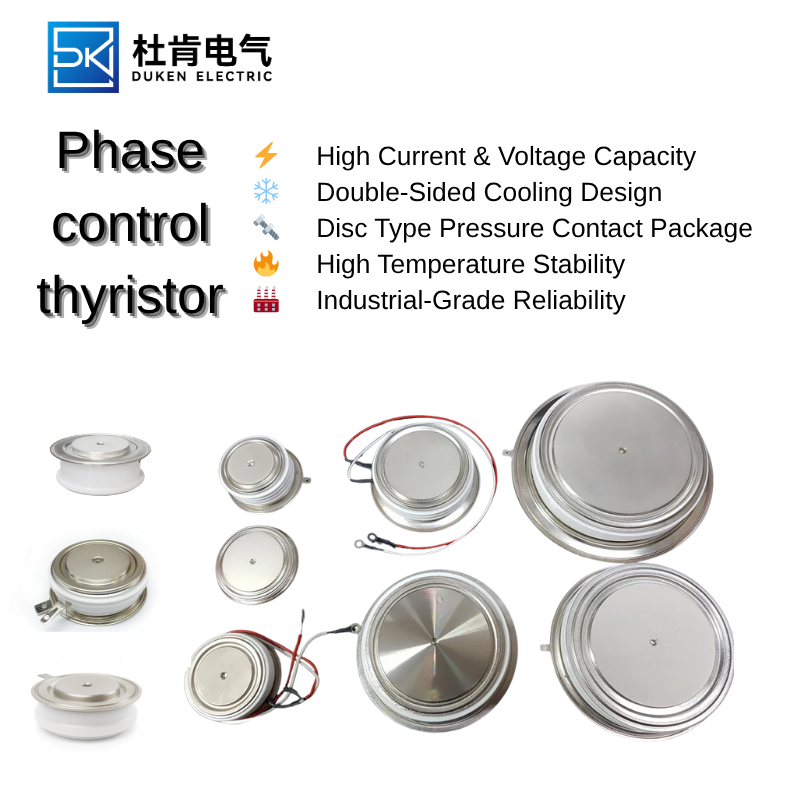
Selecting the Right 1000A Phase Control Thyristor for High-Voltage Power Conversion
Choosing a power semiconductor for high-voltage conversion is rarely a one-parameter decision. In real installations, engineers must balance current demand, repetitive blocking voltage, thermal capacity, control precision, and maintenance expectations. A 1000A phase control thyristor is commonly used where ruggedness and predictable turn-on behavior are essential, but the device must still be matched to the converter topology and the surrounding protection network. Compatibility is not about whether the part can operate in theory; it is about whether it will remain stable and efficient under daily industrial stress.
The starting point is usually the converter duty. In rectifier bridges and controlled AC-to-DC stages, the thyristor must withstand continuous conduction intervals, commutation overlap, and occasional surge events caused by starting cycles or load variation. For many rectifier cabinets, the target specification is closely associated with DC link rectification in drives forced-cooling heat sink 1000A phase control thyristor performance, because drive systems often combine heavy current demand with strict thermal limits. The device should be examined in terms of average current, RMS current, surge current, and conduction losses, not merely by reading the nominal 1000A label.
Voltage resilience is equally critical. If the system experiences line spikes, transformer switching transients, or recovery-related overshoot, the semiconductor must maintain a comfortable blocking margin. This is why designers pay close attention to devices suitable for power distribution systems 6500 V VRRM 1000A phase control thyristor applications. A high VRRM rating improves security against repetitive overvoltage stress, but true compatibility also depends on coordinated snubbers, protective fuses, and insulation spacing. In demanding power conversion cabinets, the voltage class of the thyristor must match both the normal operating voltage and the abnormal conditions that may occur during service.
Another important requirement is switching immunity. High-power converters often sit near motors, transformers, and switching equipment that create steep transient edges. Under such conditions, false triggering can become a serious risk unless the device and the surrounding circuit are designed properly. That is why engineers value a high current switching device high dv/dt immunity 1000A phase control thyristor when stability under electrical noise is a priority. High dv/dt immunity reduces the chance of unintended turn-on and supports reliable phase control, especially in installations where waveforms are less than ideal.
Thermal management should then be reviewed in detail. High-current thyristors generate substantial heat during conduction, and the thermal path from junction to ambient determines whether the device can sustain long operating hours. A converter may appear correctly rated on paper but still overheat because of inadequate airflow, poor clamping pressure, or contaminated heat sink surfaces. In these situations, the requirement for DC link rectification in drives forced-cooling heat sink 1000A phase control thyristor capability becomes a practical design condition rather than a catalog preference. Forced cooling helps stabilize junction temperature, reduces thermal cycling stress, and improves lifetime when the application runs close to continuous load.
Gate drive compatibility is another selection point that deserves attention. Thyristors depend on a reliable trigger pulse to turn on consistently across changing temperatures and supply conditions. If the gate pulse is weak, poorly timed, or vulnerable to noise, the whole converter can suffer from irregular firing and increased electrical stress. Even when a device is specified as a high current switching device high dv/dt immunity 1000A phase control thyristor, the firing circuit must still provide adequate pulse current, isolation, and synchronization. Good gate design complements the semiconductor’s inherent robustness and allows the system to exploit its full performance safely.
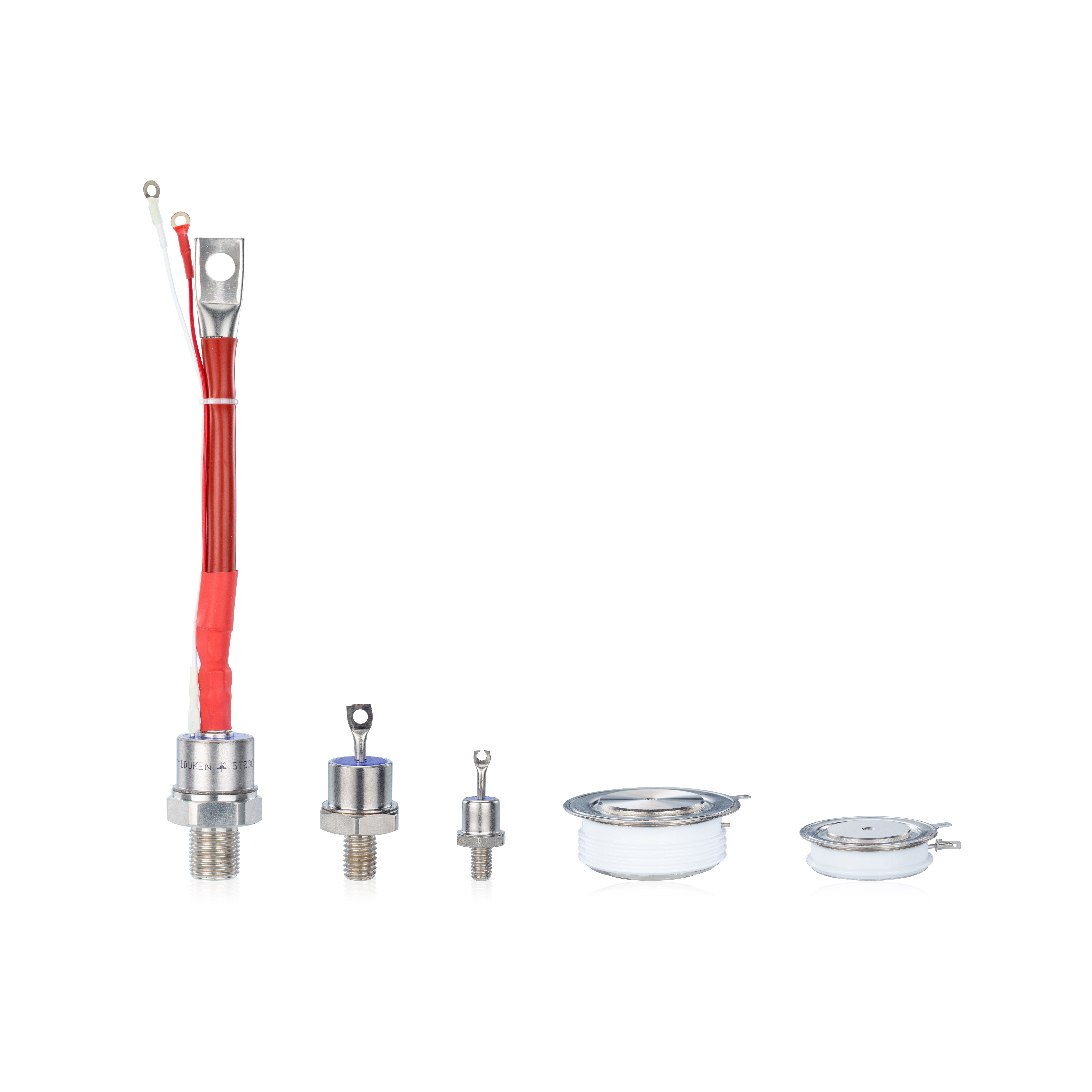
Mechanical and maintenance considerations complete the picture. Disc-type and stud-type assemblies require proper mounting force, clean interfaces, and periodic inspection in long-life industrial systems. Service teams also need access to cooling channels, firing boards, and protective components. A unit chosen for power distribution systems 6500 V VRRM 1000A phase control thyristor service should be viewed as part of a maintainable platform, not as an isolated electronic part. Reliability in the field depends on the total assembly quality, including busbar layout, creepage distance, enclosure ventilation, and protection coordination.
When comparing product options, engineers should think beyond procurement cost. The cheapest part may demand more aggressive derating, more frequent service, or tighter cooling conditions that increase system expense later. That is why the phrases DC link rectification in drives forced-cooling heat sink 1000A phase control thyristor, high current switching device high dv/dt immunity 1000A phase control thyristor, and power distribution systems 6500 V VRRM 1000A phase control thyristor often represent not marketing language, but the practical priorities of converter design: current endurance, switching security, and voltage headroom.
A successful selection process therefore combines electrical analysis, thermal modeling, mechanical review, and protection planning. When all these aspects align, a 1000A phase control thyristor can provide stable service in demanding power conversion environments for many years. Compatibility is achieved not by guessing, but by matching the device to the real operating envelope of the system.